
The influence of curcumin on skin health - current findings

 5 MIN
5 MIN  ALMAGEA
  10.01.2024
5 MIN ALMAGEA 10.01.2024
Extensive research conducted since the middle of the last century has shown that the active compound curcumin is responsible for the beneficial effects of turmeric.
By blocking or stimulating the work of target molecules, curcumin exhibits anticarcinogenic, antiproliferative, anti-inflammatory and antibacterial effects, and research shows that it could be effective in the treatment of many human diseases - diabetes, obesity, neurological diseases and chronic diseases that affect the eyes, lungs, liver, kidneys, digestive and cardiovascular systems.
Curcumin is also used in dermatology orally and topically for conditions such as acne, alopecia, atopic dermatitis, skin photoaging, oral lichen planus, pruritis, psoriasis, radiodermatitis and vitiligo.
So far, a large number of laboratory studies have been published on the impact of curcumin on skin health. Research published in 2015 on cell culture showed the beneficial effect of curcumin as a supportive therapy, along with phototherapy. In the aforementioned study, curcumin, along with radiation, reduced the production of the TNF factor, which is crucial for the development of psoriasis. Psoriasis is an immunologically regulated chronic inflammatory skin disease characterized by hyperproliferation and abnormal division of keratinocytes. TNF-a is a critical pro-inflammatory cytokine whose suppression is important for disease control.
Research on squamous skin cancer cell lines and melanoma cells has shown that curcumin reduces the invasive capabilities of cancer cells, which is why it has the potential to be used in the prevention and treatment of these types of skin cancer.
A review paper published in 2016 highlighted the clinical research published so far, and the beneficial effect of curcumin was noted in several dermatological conditions including uremic pruritus and oral lichen planus.
Uremic pruritus is a common, and sometimes severe, complication of chronic renal failure. 100 subjects on dialysis with uremic pruritus participated in the research, which lasted 8 weeks, and were divided into two groups.The first group received 1500 mg of turmeric with 66.3 mg of curcumin in capsules, while the second group received a placebo. There was a significant reduction in itching in the curcumin group. In order to evaluate the role of curcumin in itching, the scientists measured the level of C-reactive protein in the subjects - the results showed a statistically significant decrease in this indicator of inflammation in the group that received curcumin.
Curcumin also had a beneficial effect in a study in which subjects took 1 g of turmeric in capsules for 4 weeks. In addition to a subjective reduction in itching, there was a reduction in substance P, a substance that promotes itching, and there was also an increase in antioxidant enzymes compared to placebo. The influence of curcumin in the form of a dietary supplement was also examined in people with oral lichen planus. While the intake of 2,000 mg of turmeric per day for 7 weeks did not result in an improvement in the subjects' health, the intake of 6,000 mg did. It is important to note that with this relatively high dose of turmeric, no side effects of the tested dose were recorded.
In the background of many skin diseases lies an inadequate inflammatory response of the body.
A transcription factor called nuclear factor kappa B (NF-kB) controls cyclooxygenase-2 and nitric oxide synthase, and is also a regulator of cell proliferation. Curcumin is thought to suppress NF-kB.
Author: Vitaminoteka nutritionist team
Literature:
1. Gupta SC, Patchva S, Aggarwal BB. Therapeutic roles of curcumin: lessons learned from clinical trials. AAPS J. 2013 Jan;15(1):195-218.
2.Wu J, Lu WY, Cui LL. Inhibitory effect of curcumin on invasion of skin squamous cell carcinoma A431 cells. Asian Pac J Cancer Prev. 2015;16(7):2813-8.
3. Niu T, Tian Y, Cai Q, Ren Q, Wei L. Red Light Combined with Blue Light Irradiation Regulates Proliferation and Apoptosis in Skin Keratinocytes in Combination with Low Concentrations of Curcumin. PLoS One. 2015 Sep 18;10(9):e0138754.
4. Vaughn AR, Branum A, Sivamani RK. Effects of Turmeric (Curcuma longa) on Skin Health: A Systematic Review of the Clinical Evidence. Phytother Res. 2016 Aug;30(8):1243-64.
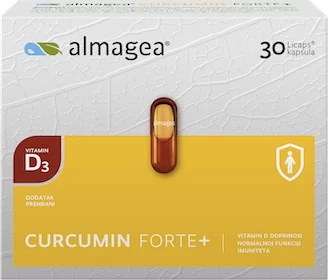
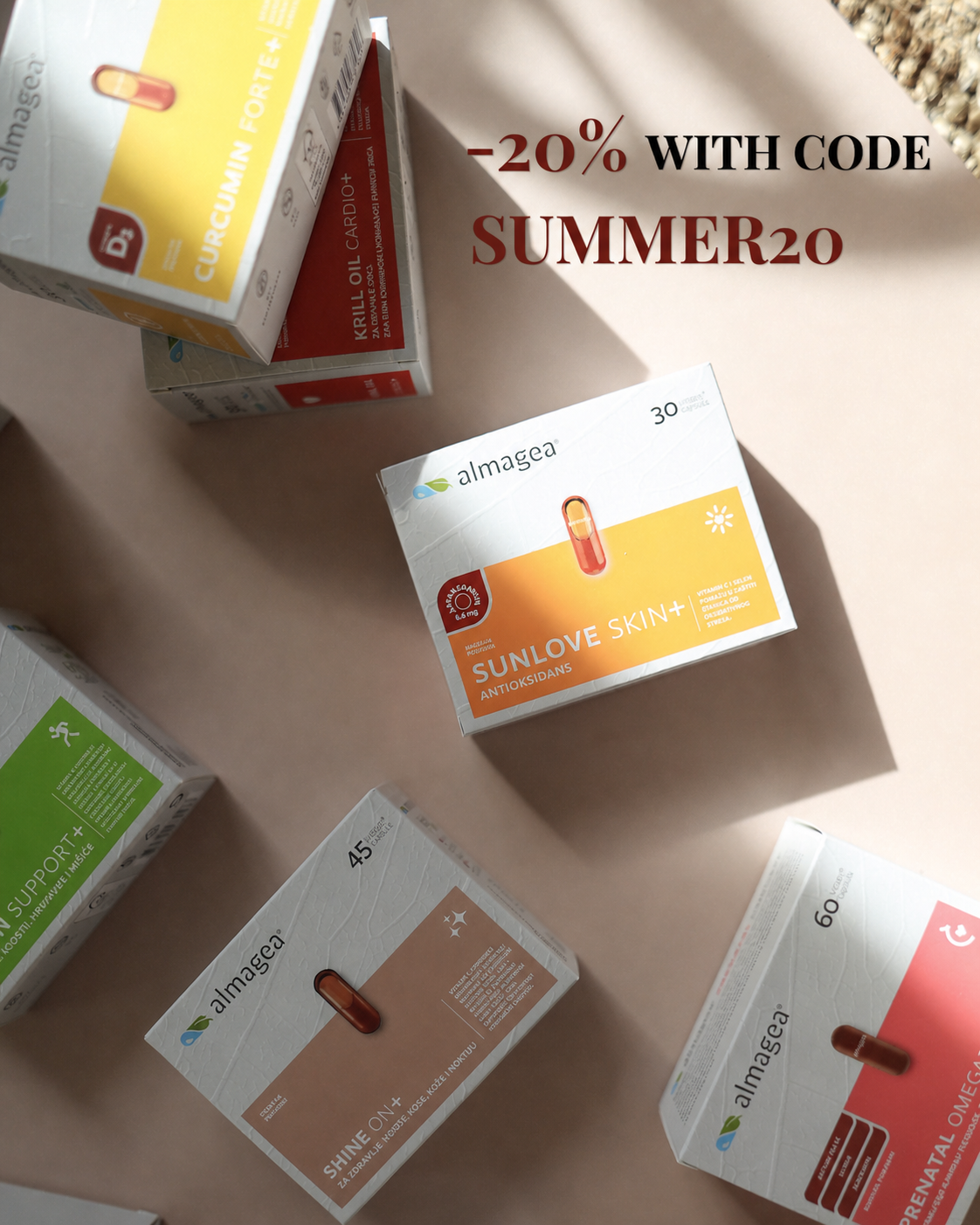
Support for the body's natural defenses with the power of curcumin and vitamin D.
22.47 €

Get to know us
Dietary supplements
Information
Let's connect
© 2024. Almagea d.o.o., Ulica Julija Knifera 4, 10 020 Zagreb
Fixed conversion rate: €1 = HRK 7.5345
buy quickly and safely