
Kurkumin – može li postati ključan dio budućih terapija za HPV?

 10 MIN
  ALMAGEA
  19.01.2024
10 MIN ALMAGEA 19.01.2024
In Croatia, one woman is diagnosed with cervical cancer every day, and one woman dies from it every third day. Because of effective and affordable prevention, cervical cancer is one of ours public health priorities.
In addition to cancers and cardiovascular diseases, the health challenges facing humanity in the 21st century are the extraordinary spread of viruses. However, in this article, we will not talk about the most common topic of our time (the SARS-CoV-2 virus pandemic), but about human papillomavirus (HPV).
<iframe width=”560″ height=”315″ src=”https://www.youtube.com/embed/rjLuHN3JKYg?si=YhMRa4H-mLdCqT3Z” title=”YouTube video player” frameborder=”0″ allow=”accelerometer; autoplay; clipboard-write; encrypted-media; gyroscope; picture-in-picture; web-share” allowfullscreen></iframe>
During their lifetime, at least 50% of sexually active people will be infected with HPV. HPV infection usually goes away on its own with the action of your own immune system. HPV is the most common sexually transmitted disease affecting 13% of the world's population1 and unfortunately it still does not occupy enough media space that it "deserves", considering that according to previous reports, 34,800 new HPV-related cancers can be expected every year, if the spread of the infection is not prevented2.
Depending on your oncogenic potential (the propensity of the virus to promote carcinogenic changes in our cells), HPV types are divided into low risk and high-risk types.
Namely, HPV is the cause of cervical cancer in over 98% of cases that's why it's known as "silent killer", since infected people are usually not aware of the presence of the virus, nor of the cancer that develops because of it, until it is too late to cure. On the other hand, current therapeutic approaches have certain limitations, therefore the development of new therapeutic platforms could optimize the outcome of the treatment of cancers related to the reproductive system.
The most important medicinal plants, which are often used in antiviral treatments in Ayurveda medicine, for the past ten years they have often been the subject of research studies.
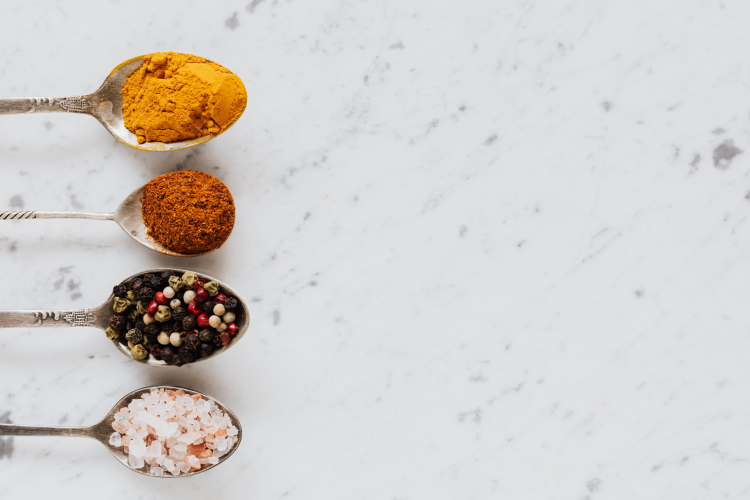
Curcumin is the main bioactive ingredient of turmeric and has various therapeutic potentials, such as: antitumor5,6, anti-atherosclerotic7,8, antimicrobial, antiviral9, antioxidant10 and anti-inflammatory11–13. More than 300 clinical studies have confirmed its beneficial effects in various diseases, and we are particularly interested in its antiviral and anticarcinogenic effects in this topic.
Natural compounds such as curcumin have the ability to modulate some genetic and epigenetic mechanisms, which can increase the sensitivity of cancer cells to conventional drugs and thus inhibit tumor growth14,15.
Curcumin has been found to have a wide variety of molecular targets, including some transcription factors, genetic modulators, kinases, growth factors, and cell membrane receptors.16-20. So, we can say that this ancient ingredient has the ability to protect us at the genetic level from the development of unwanted changes in the cells. Numerous studies have shown that curcumin acts as beneficial auxiliary and chemopreventive means in cancer21.What is extremely important: human studies have shown the tolerability, safety and anticarcinogenicity of this compound in humans22, 23.
Cervical cancer is the third most common malignancy and the fourth leading cause of cancer death in women24. Nowadays, its frequency is increasing among younger women25. Patients who are still in the early stages of the stage have a good prognosis and respond successfully to conventional treatments, including chemoradiation and/or surgery.26. In a series of studies, curcumin shows chemotherapeutic action and chemopreventive effects27. Nekoliko studija je dokazalo potencijalnu korist kurkumina u liječenju s monoterapijom (kada je korišten samo kurkumin) i u kombinaciji sa standardnim kemoterapeutskim lijekovima. Također zanimljivo – pokazalo se da curcumin improves the effectiveness of current therapy by sensitizing the resistance of cancer cells to chemoradiotherapy, which was a major obstacle in the treatment of cancer.
Studija znanstvenika Divya i Pillai iz 2006. godine imala je za cilj analizirati antitumorska i antivirusna svojstva kurkumina na stanice raka vrata maternice povezane s HPV-om. Their findings show that curcumin is cytotoxic to cervical cancer cells.Cytotoxic activity was selectively higher in cells infected with high-risk HPV types (types 16 and 18) compared to non-HPV-infected cells.29.
The effects of curcumin in gynecological cancers show that its action is related to the activation of autophagy and apoptotic pathways and the inhibition of invasion and metastasis of carcinogenic cells in several types of tumors. Curcumin suppresses (suppresses) substances that promote inflammation (such as NF-κB and its gene "targets") and that play a significant role in controlling the invasion and metastasis of cancer cells28.
The balance between proliferation (division) of tumor cells and spontaneous cell death through apoptosis played an important role in the regulation of tumor cell growth. Curcumin induced apoptosis in cervical cancer cells.Curcumin also selectively regulated the binding of AP-1, an indispensable (epithelial tissue-specific) component for efficient HPV gene expression. These results provide attractive data for the possible use of curcumin in the treatment of HPV-related tumors30. Ghasemi et al. recently carried out in vitro study to evaluate the mechanisms associated with the anticancer effects of curcumin on cervical cancer cell lines and once again confirmed that curcumin suppresses the proliferation and invasion of cervical cancer cells31.
Recently, it was reported that curcumin shows an extremely "smart" effect, namely that it increases intracellular levels of reactive oxygen species (ROS, reactive oxygen species) in cervical cancer cells, but not in healthy epithelial cells.These ROS are free radicals that have a cytotoxic effect on cancer cells. These observations indicate that curcumin promotes apoptosis of cervical cancer cells by increasing the generation of ROS specific to that cell type32.
According to Yoysungnoen-Chintana's study report33 which they conducted on an animal model, it was shown that curcumin inhibits angiogenesis as well as tumor growth.
What is extremely important is the safety and tolerability of curcumin, which has been proven in numerous clinical studies. From all the data and facts presented, we conclude that it is necessary to focus more studies on the active ingredients provided by nature, which have a great potential for use in the development of antiviral drugs of the future generation34. In addition to the mentioned beneficial effects, curcumin therapy still faces certain limitations such as low bioavailability.
The bioavailability of a compound indicates the proportion of the applied active ingredient that reaches the systemic circulation and shows benefits for the user's health. Since poor bioavailability limits the therapeutic benefit of curcumin, numerous attempts have been made to increase its absorption. In this regard, the most significant contribution to the bioavailability of curcumin was achieved by the company AQUANOVA (Germany), which produced curcumin in micelles (protected name: NovaSOL® Curcumin).
How was this achieved? Korištenjem fizikalnog procesa solubilization - which enables curcumin, which is normally insoluble in water, to become water soluble.The bioavailability of this micellar form of curcumin was proven by a study from 201435 in which 23 human subjects participated, where it was proven that the solubilized form of curcumin in micelles shows superior bioavailability compared to other forms of curcumin; specifically he had even 185 times more bioavailability than native curcumin which we find in turmeric powder. This important scientific and technological step opens up new horizons in the prevention and treatment of the biggest challenges of today's medicine.
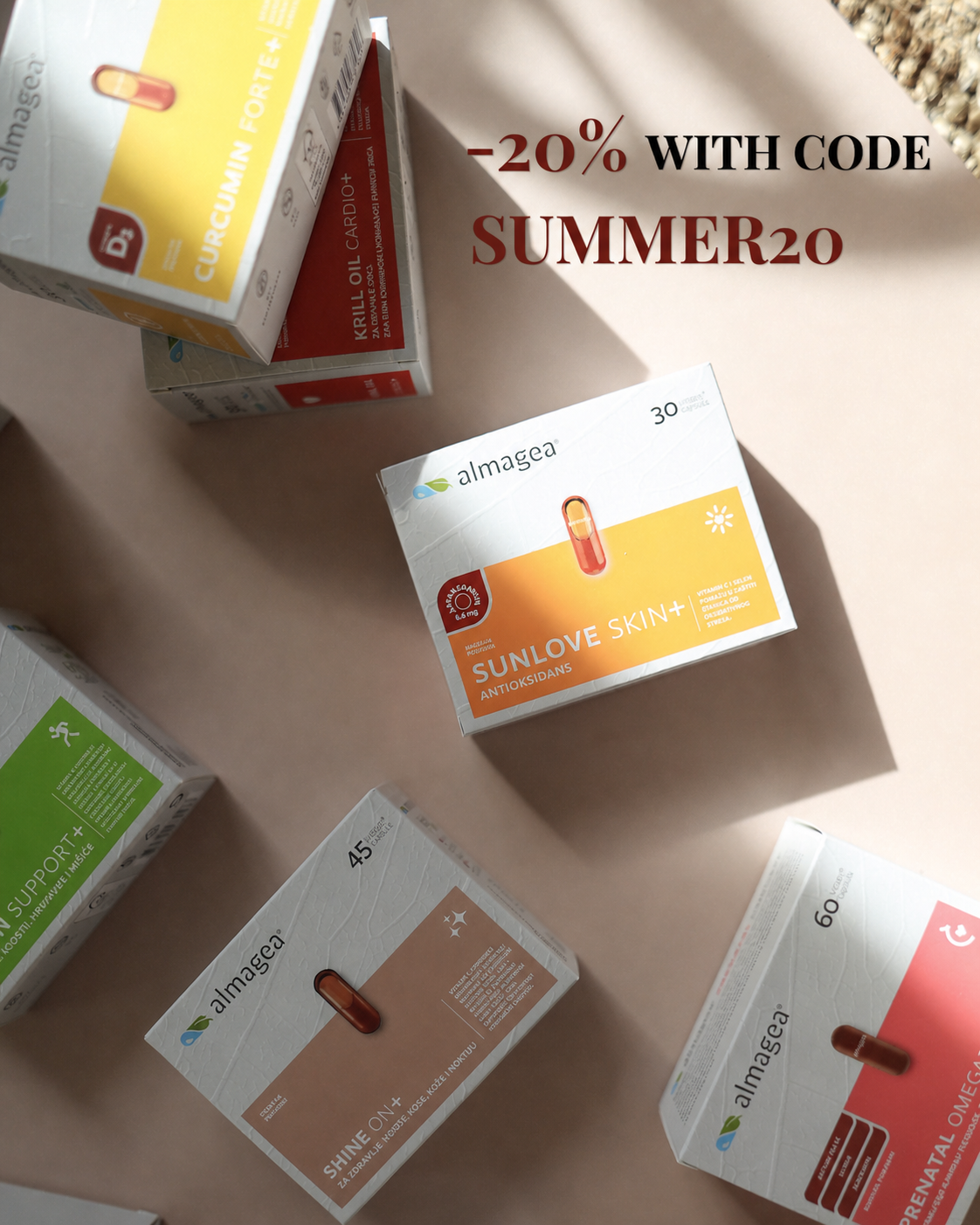
Curcumin Forte+ contains a powerful synergy of the highly usable micellar form of curcumin (NovaSOL® Curcumin) and vitamin D, which contributes to normal immune function.That's right one Licaps® capsule corresponds to the use of 5800 mg of native curcumin, that is, approximately 232 grams of turmeric powder. Curcumin Forte+ comes in Licaps® capsules that do not contain solvents, preservatives, gluten, starch, sugar, plasticizers, lactose, allergens and GMO ingredients. The product is intended for all people who want to contribute to a better immune function, a more correct process of cell division and function, and those who want to introduce a highly useful form of curcumin.

Thank you for taking the time to read this text!If you liked it, share this text with a loved one who you know should read it so that together we can increase awareness of the steps we can take to prevent the spread of HPV and the occurrence cervical cancer!
All shared information is based on research and facts and we recommend using it only as a supplement to the recommendations and official diagnosis of your doctor/specialist and is not a substitute for medical opinion. If you and/or your partner have HPV, we invite you to contact your gynecologist (women) or dermatovenerologist (men). A dietary supplement is not a substitute or substitute for a balanced diet. It is important to follow a varied and balanced diet and a healthy lifestyle.
Literature:
1.Pennycook KB, McCready TA: Condyloma Acuminata. In: StatPearls. Treasure Island (FL): StatPearls Publishing, StatPearls Publishing LLC.; 2021
2. Senkomago V, Henley SJ, Thomas CC, Mix JM, Markowitz LE, SaraiyaM (2019) Human Papillomavirus-Attributable Cancers – the United States, 2012-2016. MMWR Morbidity and mortality weekly report, 68(33):724-728. doi:10.15585/mmwr.mm6833a3.
3. Zur Hausen H. (2009) Papillomaviruses in the causation of human cancers – a brief historical account. Virology;384(2):260–5.
4. Pappa, K.I., Kontostathi, G., Lygirou, V., Zoidakis, J., Anagnou, N.P. (2018) Novel structural approaches concerning HPV proteins: Insight into targeted therapies for cervical cancer. Oncology reports, 39(4):1547-1554. doi:/10.3892/or.2018.6257.
5.Vallianou NG, Evangelopoulos A, Schizas N, Kazazis C. Potential anticancer properties and mechanisms of action of curcumin. Anticancer Res. 2015; 35(2):645–51.
6. Teymouri M, Pirro M, Johnston TP, Sahebkar A. Curcumin as a multifaceted compound against human papilloma virus infection and cervical cancers: A review of chemistry, cellular, molecular, and preclinical features. BioFactors. 2017;43(3):331–46.
7. Miriyala S, Panchatcharam M, Rengarajulu P. Cardioprotective effects of curcumin. Adv Exp Med Biol. 2007;595:359–77.
8. Um MY, Hwang KH, Choi WH, Ahn J, Jung CH, Ha TY. Curcumin attenuates adhesion molecules and matrix metalloproteinase expression in hypercholesterolemic rabbits. Nutr Res (New York, NY). 2014;34(10):886–93.
9. Moghadamtousi SZ, Kadir HA, Hassandarvish P, Tajik H, Abubakar S, Zandi K. A review on antibacterial, antiviral, and antifungal activity of curcumin. BioMed Res Int. 2014;2014:186864.
10. Sahebkar A, Serban M-C, Ursoniu S, Banach M. Effect of curcuminoids on oxidative stress: A systematic review and meta-analysis of randomized controlled trials. J Functional Foods. 2015;18:898–909.
11. Panahi Y, Hosseini MS, Khalili N, Naimi E, Simental-Mendia LE, Majeed M, Sahebkar A. Effects of curcumin on serum cytokine concentrations in subjects with metabolic syndrome: A post-hoc analysis of a randomized controlled trial. Biomed Pharmacother. 2016;82:578–82.
12.Abdollahi E, Momtazi AA, Johnston TP, Sahebkar A. Therapeutic effects of curcumin in inflammatory and immune-mediated diseases: A nature-made jack-of-all-trades? J Cell Physiol. 2018;233(2):830–48.
13. Mollazadeh H, Cicero AFG, Blesso CN, Pirro M, Majeed M, Sahebkar A. Immune modulation by curcumin: The role of interleukin-10. Crit Rev Food Sci Nutr. 2019;59(1):89–101.
14. Li Y, Kong D, Wang Z, Sarkar FH. Regulation of microRNAs by natural agents: an emerging field in chemoprevention and chemotherapy research. Pharm Res. 2010;27(6):1027–41.
15. Reuter S, Gupta SC, Park B, Goel A, Aggarwal BB. Epigenetic changes induced by curcumin and other natural compounds. Genes Nutr. 2011;6(2): 93–108.
16. Momtazi AA, Derosa G, Maffioli P, Banach M, Sahebkar A. Role of microRNAs in the Therapeutic Effects of Curcumin in Non-Cancer Diseases. Mol Diagn Ther.2016;20(4):335–45.
17. Gupta SC, Patchva S, Aggarwal BB. Therapeutic roles of curcumin: lessons learned from clinical trials. AAPS J. 2013;15(1):195–218.
18. Soleimani V, Sahebkar A, Hosseinzadeh H. Turmeric (Curcuma longa) and its major constituent (curcumin) as nontoxic and safe substances: Review. Phytother Res. 2018;32(6):985–95.
19. Ferlay J, Colombet M, Soerjomataram I, Mathers C, Parkin DM, Pineros M, Znaor A, Bray F. Estimating the global cancer incidence and mortality in 2018: GLOBOCAN sources and methods. Int J Cancer. 2019;144(8):1941–53.
20. Suh DH, Kim M, Lee KH, Eom KY, Kjeldsen MK, Mirza MR, Kim JW. Major clinical research advances in gynecologic cancer in 2017. J Gynecol Oncol. 2018;29(2):e31.
21. Kumar G, Mittal S, Sak K, Tuli HS.Molecular mechanisms underlying the chemopreventive potential of curcumin: Current challenges and future perspectives. Life Sci. 2016;148:313–28.
22. Gupta SC, Patchva S, Aggarwal BB. Therapeutic roles of curcumin: lessons learned from clinical trials. AAPS J. 2013;15(1):195–218.
23. Soleimani V, Sahebkar A, Hosseinzadeh H. (2018) Turmeric (Curcuma longa) and its major constituent (curcumin) as nontoxic and safe substances: Review. Phytother Res;32(6):985–95.
24. Wu ES, Jeronimo J, Feldman S. (2017) Barriers and Challenges to Treatment Alternatives for Early-Stage Cervical Cancer in Lower-Resource Settings. J Global Oncol;3(5):572–82.
25. Kessler TA. (2017) Cervical Cancer: Prevention and Early Detection. Semin Oncol Nurs.;33(2):172–83.
26. Marth C, Landoni F, Mahner S, McCormack M, Gonzalez-Martin A, Colombo N. Cervical cancer: ESMO Clinical Practice Guidelines for diagnosis, treatment and follow-up. Ann Oncol. 2017;28(suppl_4):iv72–83.
27.Nardo L, Andreoni A, Bondani M, Masson M, Hjorth Tonnesen H. (2009) Studies on curcumin and curcuminoids. XXXIV. Photophysical properties of a symmetrical, non-substituted curcumin analogue. J Photochem Photobiol B.; 97(2):77–86.
28. Pourhanifeh et al. (2020) Therapeutic role of curcumin and its novel formulations in gynecological cancers. Journal of Ovarian Research;13:130.doi.org/10.1186/s13048-020-00731-7.
29. Prusty BK, Das BC. Constitutive activation of transcription factor AP-1 in cervical cancer and suppression of human papillomavirus (HPV) transcription and AP-1 activity in HeLa cells by curcumin (2005). Int J Cancer; 113(6):951–60.
30. Chandrasekhar S.Divya, M Radhakrishna Pillai (2006) Antitumor action of curcumin in human papillomavirus associated cells involves downregulation of viral oncogenes, prevention of NFKB and AP-1 translocation and modulation of apoptosis. Molecular Carcinogenesis; 45(5):320-32. doi:10.1002/mc.20170.
31. Ghasemi F, Shafiee M, Banikazemi Z, Pourhanifeh MH, Khanbabaei H, Shamshirian A, Moghadam SA, ArefNezhad R, Sahebkar A, Avan A. (2019) Curcumin inhibits NF-kB and Wnt/β-catenin pathways in cervical cancer cells. Pathol Res Pract; 215(10):152556.
32. Kim B, Kim HS, Jung EJ, Lee JY, Tsang BK, Lim JM, Song YS. (2016) Curcumin induces ER stress-mediated apoptosis through selective generation of reactive oxygen species in cervical cancer cells. Mol Carcinog; 55(5):918–28.
33. Yoysungnoen-Chintana P, Bhattarakosol P, Patumraj S.(2014) Antitumor and antiangiogenic activities of curcumin in cervical cancer xenografts in nude mice. Biomed Res Int; 2014:817972.
34. Fazeli, M. et al. (2021) Investigation of potential antiviral natural products with an effect on HPV18 E6 protein by molecular docking method. Functional Foods in Health and Disease; 11(11):586-603. doi:10.31989/ffhd.v11i11.840.
35. Schiborr C, Kocher A, Behnam D, Jandasek J, Toelstede S, Frank J. (2014) The oral bioavailability of curcumin from micronized powder and liquid micelles is significantly increased in healthy humans and differs between sexes. Mol Nutr Food Res; 58(3):516-27.
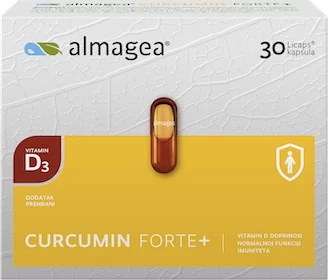
Support for the body's natural defenses with the power of curcumin and vitamin D.
22.47 €

Get to know us
Dietary supplements
Information
Let's connect
© 2024. Almagea d.o.o., Ulica Julija Knifera 4, 10 020 Zagreb
Fixed conversion rate: €1 = HRK 7.5345
buy quickly and safely