

Application of curcumin in gastroenterology

 10 MIN
  ALMAGEA
  10.01.2024
10 MIN ALMAGEA 10.01.2024
Curcumin is the most active ingredient in turmeric and has been described as a substance with anti-inflammatory, antioxidant, immunomodulatory, pro-apoptotic and anti-proliferative effects (1,2).
Due to its strong anti-inflammatory and antineoplastic properties, curcumin is often used and researched independently or as a supportive therapy in addition to standard therapies.The early stages of research indicated pharmacological properties, and studies systematically show a good safety profile, harmlessness and easy tolerance during application (3).
Curcumin acts on multiple therapeutic targets as part of the cascade of inflammatory reactions and their signaling pathways (Figure 1). It is known that inactivates NF-kB (4) – an important transcription factor that regulates cellular activity, especially when it comes to stress and injury, and is therefore crucial in the inflammatory and immune response. NF-kB activation appears to be critical in the relationship between chronic inflammation and cancer development, as demonstrated in a murine model of colitis-induced cancer where deletion of IkB from epithelial cells resulted in increased apoptosis and decreased tumor incidence.
In vitro studije pokazuju da se inaktivacija NF-kB djelovanjem kurkumina vjerojatno zbiva putem različitih mehanizama, uključujući slabljenje IkB uz inhibiciju TNF-ovisne IkBα fosforilacije i degradacije (5). Nadalje, kurkumin inhibira IkB kinazu – bilo izravno ili inhibicijom TNF [6]. Inaktivacija NF-kB vodi smanjenoj ekspresiji cikolooksigenaze-2 (COX-2), slabljenju djelovanja citokina (TNF-α, IL) te kemokina. NF-kB je temeljna molekula važna za rast stanice, diferencijaciju i proliferaciju i „glavni igrač“ u karcinogenezi. Kurkumin inhibira stvaranje TNF-α i dušičnog oksida (NO) in vivo and consequently reduces tissue damage (7). Promising clinical outcomes, which are visible from animal models where curcumin was applied in inflammatory bowel diseases, have so far been generally confirmed by the early results of clinical research (8-11).
It is known that in malignant diseases, dysregulation of numerous metabolic pathways occurs. Curcumin can modulate numerous cellular pathways involved in carcinogenesis and thus acts as a biologically active compound with multiple therapeutic targets. The ability to influence different pathways expands therapeutic options and may reduce the development of resistance that occurs when signaling occurs through alternative pathways. The bulk of the evidence on the mechanism of anticarcinogenic action of curcumin comes from in vitro and in vivo a study on colorectal adenocarcinoma. Curcumin appears to interact with all key pathways associated with the adenoma-adenocarcinoma sequence, including APC, TP53, KRAS and c-Myc.
In vivo evidence indicates that curcumin can prevent disease progression by modulating cellular mechanisms involved in proliferation, angiogenesis, and metastasis (12).

Turmeric root has been used in India for centuries to treat inflammatory disorders (2). Today we know that the pleiotropic effects of curcumin are largely based on the inhibition of the transcription factor NF-κB. Furthermore, curcumin affects both the innate and acquired immune response, and due to these diverse effects, it has been repeatedly investigated in numerous studies on animal models and patients suffering from inflammatory bowel diseases, especially ulcerative colitis.
Although the results of human research are not consistent, there are studies that indicate that curcumin is effective in maintaining remission in patients with mild to moderate ulcerative colitis. Also, a less randomized, double-blind clinical study showed that the addition of curcumin to mesalamine therapy more effectively induced patients into clinical and endoscopic remission compared to placebo in combination with mesalamine (13).
In recent years, there has been a great interest in different herbal preparations that have an antibacterial effect on Helicobacter pylori, and curcumin is increasingly mentioned for this purpose in the literature.In addition to its antibacterial activity, curcumin has the ability to disrupt biofilms, which indicates multiple roles in the inhibition of infection Helicobacter pylori (14). Furthermore, studies have been conducted that indicate the benefit of using curcumin in comparison with triple eradication therapy. The use of this natural substance has a wide range of effects, as it reduces chronic inflammation and prevents carcinogenic changes in patients with chronic infection-related gastritis. H. pylori (15).
Numerous in vitro and preclinical evidence supports the use of curcumin in a spectrum of colonic neoplasms. There are studies where curcumin has been used in combination with standard chemotherapy in colorectal cancer with positive results. In studies conducted on patients with colon cancer, curcumin was used in doses of 360 mg to 8 g for a period of several weeks to several months.
Curcumin has been used alone or in combination with gemcitabine in patients with advanced pancreatic cancer. These studies indicated the long-term tolerability of curcumin with advanced malignancy during the administration of potentially toxic chemotherapy. It has also been shown that curcumin can modulate metabolic pathways in the formation of gallstones, and its effectiveness is being investigated in irritable bowel syndrome, hepatitis, pancreatitis and familial adenomatous polyposis (FAP) (3).
Author: Prof. Dr.Sc. Darija Vranešić Bender, clinical nutritionist
Literature:
1. Ammon HP, Wahl MA. Pharmacology of Curcuma longa. Planta Med 1991; 57: 1-7 [PMID: 2062949 DOI: 10.1055/s-2006-960004]
2. Jain SK. Ethnobotany and research on medicinal plants in India. Ciba Found Symp 1994; 185: 153-164; discussion 164-168 [PMID:7736852]
3. Irving GR, Karmokar A, Berry DP, Brown K, Steward WP. Curcumin: The potential for efficacy in gastrointestinal diseases Best Practice & Research Clinical Gastroenterology 25 (2011) 519–534
4. Joe B, Vijaykumar M, Lokesh BR. Biological properties of curofcumin-cellular and molecular mechanisms of action. Crit Rev Food Sci Nutr 2004; 44: 97-111 [PMID: 15116757 DOI: 10.1080/10408690490424702]
5. Salh B, Assi K, Templeman V, Parhar K, Owen D, Gómez-Muñoz A,Jacobson K. Curcumin attenuates DNB-induced murine colitis. Am J Physiol Gastrointest Liver Physiol 2003; 285: G235-G243 [PMID:12637253 DOI: 10.1152/ajpgi.00449.2002]
6. Aggarwal S, Ichikawa H, Takada Y, Sandur SK, Shishodia S, Aggarwal BB. Curcumin (diferuloylmethane) down-regulates expression of cell proliferation and antiapoptotic and metastatic gene products through suppression of IkappaBalphakinase and Akt activation. Mol Pharmacol 2006;69(1):195–206.
7. Sharma S, Kulkarni SK, Agrewala JN, Chopra K. Curcumin attenuates thermal hyperalgesia in a diabetic mouse model of neuropathic pain. Eur J Pharmacol 2006 1;536(3):256–61.
8. Holt PR, Katz S, Kirshoff R. Curcumin therapy in inflammatory bowel disease: a pilot study. Dig Dis Sci 2005 Nov;50(11):2191–3.
9. Billerey-Larmonier C, Uno JK, Larmonier N, Midura AJ, Timmermann B, Ghishan FK, et al.Protective effects of dietary curcumin in mouse model of chemically induced colitis are strain dependent. Inflamm Bowel Dis 2008 Jun;14(6):780–93.
10. Hanai H, Iida T, Takeuchi K, Watanabe F, Maruyama Y, Andoh A, et al. Curcumin maintenance therapy for ulcerative colitis: randomized, multicenter, double-blind, placebo-controlled trial. Clin Gastroenterol Hepatol 2006 Dec;4(12):1502–6.
11. Larmonier CB, Midura-Kiela MT, Ramalingam R, Laubitz D, Janikashvili N, Larmonier N, et al. Modulation of neutrophil motility by curcumin: implications for inflammatory bowel disease. Inflamm Bowel Dis 2011 Feb;17(2):503–15.
12. Li L, Braiteh FS, Kurzrock R. Liposome-encapsulated curcumin: in vitro and in vivo effects on proliferation, apoptosis, signaling, and angiogenesis. Cancer 2005 Sep 15;104(6):1322–31.
13.Lang A, Salomon N, Wu JC, Kopylov U, Lahat A, Har-Noy O, Ching JY, Cheong PK, Avidan B, Gamus D, Kaimakliotis I, Eliakim R, Ng SC, Ben-Horin S. Curcumin in Combination With Mesalamine Induces Remission in Patients With Mild-to-Moderate Ulcerative Colitis in a Randomized Controlled Trial. Clin Gastroenterol Hepatol. 2015;13(8):1444-9.e1.
14. Vetvicka V, Vetvickova J, Fernandez-Botran R. Effects of curcumin on Helicobacter pylori infection. Ann Transl Med. 2016 Dec;4(24):479. doi: 10.21037/atm.2016.12.52.
15. Judaki A, Rahmani A, Feizi J, Asadollahi K, Hafezi Ahmadi MR. Curcumin in combination with triple therapy regimes ameliorates oxidative stress and histopathologic changes in chronic gastritis–associated Helicobacter pylori infection. Arq Gastroenterol. 2017 May 8:0. doi: 10.1590/S0004-2803.201700000-18.
16. McFadden RM, Larmonier CB, Shehab KW, Midura-Kiela M, Ramalingam R, Harrison CA, Besselsen DG, Chase JH, Caporaso JG, Jobin C, Ghishan FK, Kiela PR. The Role of Curcumin in Modulating Colonic Microbiota During Colitis and Colon Cancer Prevention. Inflamm Bowel Dis. 2015;21(11):2483-94.
17. Shen L, Liu L, Ji HF. Regulatory effects of curcumin spice administration on gut microbiota and its pharmacological implications. Food Nutr Res. 2017 Aug 9;61(1):1361780. doi: 10.1080/16546628.2017.1361780.
18. Schiborr C, Kocher A, Behnam D, Jandasek J, Toelstede S, Frank J. The oral bioavailability of curcumin from micronized powder and liquid micelles is significantly increased in healthy humans and differs between sexes. Mol Nutr Food Res. 2014;58(3):516-27.
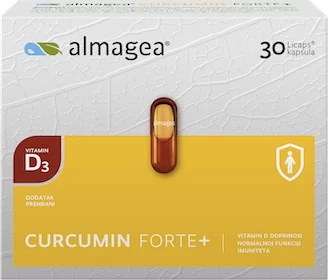
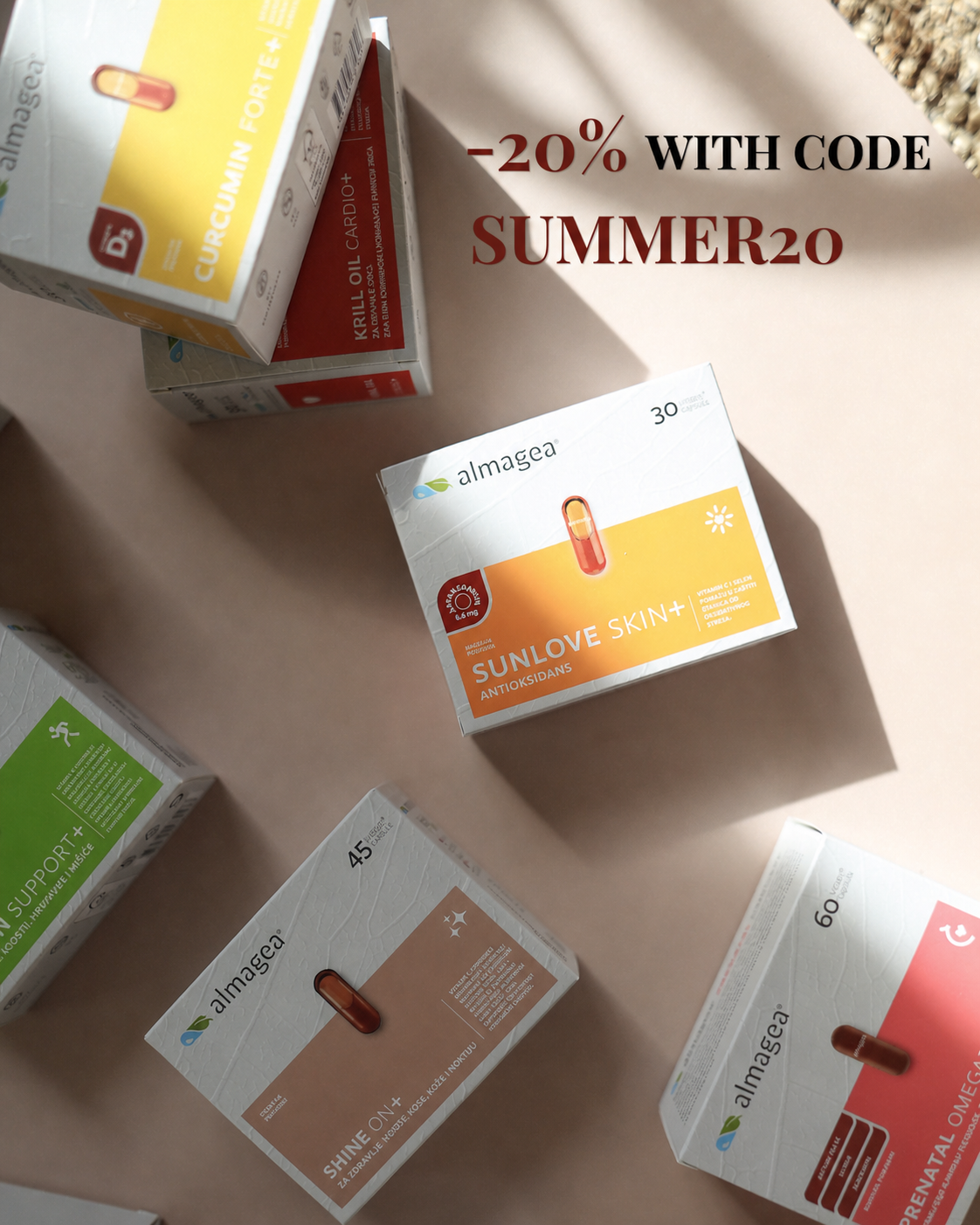
Support for the body's natural defenses with the power of curcumin and vitamin D.
22.47 €


Get to know us
Dietary supplements
Information
Let's connect
© 2024. Almagea d.o.o., Ulica Julija Knifera 4, 10 020 Zagreb
Fixed conversion rate: €1 = HRK 7.5345
buy quickly and safely