

Curcumin as supportive therapy in depression

 7 MIN
7 MIN  ALMAGEA
  09.01.2024
7 MIN ALMAGEA 09.01.2024
Major depressive disorder Major Depressive Disorder, MDD) is one of the most common psychosomatic disorders that shows a pronounced tendency to increase. In order to relieve the symptoms of depression, patients are prescribed different types of antidepressants, from monoamine oxidase inhibitors until serotonin reuptake inhibitors. Despite the wide availability of these substances, it is estimated that approximately 30% of patients do not respond to antidepressant therapy and 70% of patients fail to achieve complete remission (1).
A reduced concentration of monoamines, primarily serotonin, noradrenaline and dopamine, in the synaptic membrane of patients is often cited as the leading cause of depression.However, recent findings reveal a whole range of disorders accompanying major depressive disorder: from activation of inflammatory pathways, increased oxidative stress to increased activity of the pituitary-hypothalamic-adrenal axis (HPA) (2). Scientists are looking for new therapeutic approaches in the treatment of depression and, in this context, curcumin has been recognized as a molecule that shows promising results (1,3).
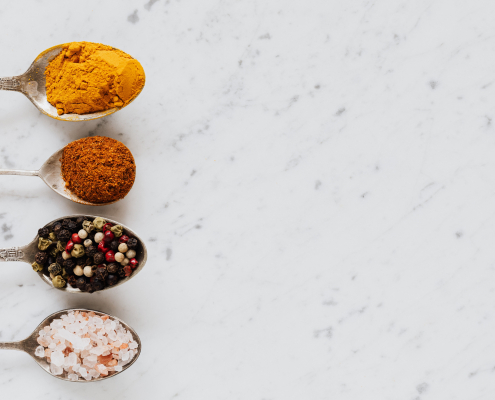
Curcumin is the main plant compound and the characteristic yellow pigment of turmeric powder, which is obtained by extracting the rhizome of the plant Curcuma longa.
More and more evidence supports the neuroprotective effect of curcumin, which is why it is being considered either as a monotherapy or as a supportive therapy in depression (6).
Research published in recent years has shown that pro-inflammatory cytokines and oxidative stress, among other things, underlie depression. Precisely because of its proven anti-inflammatory and antioxidant properties, curcumin represents an interesting and potentially successful therapy for depression.
Zanimljivo, istraživanja ukazuju na vremenski odmak djelovanja kurkumina – potrebno je i do nekoliko tjedana unosa da bi antidepresivni učinak kurkumina došao do izražaja što potvrđuje i meta-analiza 6 studija. Pokazalo se da kratkotrajna primjena kurkumina (kraće od 6 tjedana) ne pokazuje statistički značajno smanjene simptoma depresije, dok primjena dulja od 6 tjedana ima značajan antidepresivni učinak. Dodatno, analiza je pokazala kako kurkumin kao potporna terapija u liječenju depresije najbolje rezultate pokazuje kod osoba srednje dobi (8).
Curcumin has a whole range of activities that can explain its effectiveness, which include:

Major depressive disorder is a common disease in which, despite the wide availability of drugs, the percentage of complete cure is low, and the frequency of symptoms returning is high. Great efforts are being made to find new substances that will provide effective therapy for depression.
Author: Sandra Krstev Barać, M.Sc.
Literature:
1. Kulkarni S, Dhir A, Akula KK. Potentials of curcumin as an antidepressant. Scientific WorldJournal. 2009;9:1233-41.
2. Lopresti AL, Maes M, Maker GL, Hood SD, Drummond PD.Curcumin for the treatment of major depression: a randomized, double-blind, placebo-controlled study. J Affect Disord. 2014;167:368-75.
3. Esmaily H, Sahebkar A, Iranshahi M, Ganjali S, Mohammadi A, Ferns G, Ghayour-Mobarhan M. An investigation of the effects of curcumin on anxiety and depression in obese individuals: A randomized controlled trial. Chin J Integr Med. 2015;21(5):332-8.
4. Ammon HP, Wahl MA. Pharmacology of Curcuma longa. Planta Med 1991; 57: 1-7 [PMID: 2062949 DOI: 10.1055/s-2006-960004].
5. Jain SK. Ethnobotany and research on medicinal plants in India. Ciba Found Symp 1994; 185: 153-164; discussion 164-168 [PMID:7736852].
6. Kanchanatawan B et al. Add-on Treatment with Curcumin Has Antidepressive Effects in Thai Patients with Major Depression: Results of a Randomized Double-Blind Placebo-Controlled Study. Neurotox Res. 2018. doi: 10.1007/s12640-017-9860-4. [Epub ahead of print]
7. Yu, J.J., Pei, L.B., Zhang, Y., Wen, Z.Y., Yang, J.L., 2015. Chronic supplementation of curcumin enhances the efficacy of antidepressants in major depressive disorder: a randomized, double-blind, placebo-controlled pilot study. J. Clin. Psychopharmacol. 35, 406–410.
8. Al-Karawi D, Al Mamoori DA, Tayyar Y. The Role of Curcumin Administration in Patients with Major Depressive Disorder: Mini Meta-Analysis of Clinical Trials. Phytother Res. 2016;30(2):175-83.
9. Tizabi Y, Hurley LL, Qualls Z, Akinfiresoye L.Relevance of the anti-inflammatory properties of curcumin in neurodegenerative diseases and depression. Molecules. 2014; 19(12):20864-79.
10. Lopresti AL, Hood SD, Drummond PD. Multiple antidepressant potential modes of action of curcumin: a review of its anti-inflammatory, monoaminergic, antioxidant, immune-modulating and neuroprotective effects. J Psychopharmacol. 2012;26(12):1512-24.
11. Lopresti AL, Drummond PD. Efficacy of curcumin, and a saffron/curcumin combination for the treatment of major depression: A randomised, double-blind, placebo-controlled study. J Affect Disord. 2017.207:188-196.
12. Schiborr C, Kocher A, Behnam D, Jandasek J, Toelstede S, Frank J.The oral bioavailability of curcumin from micronized powder and liquid micelles is significantly increased in healthy humans and differs between sexes. Mol Nutr Food Res. 2014;58(3):516-27.
J Alzheimers Dis. 2006;10:1–7.
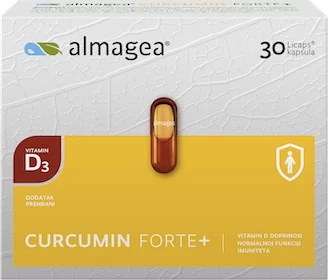
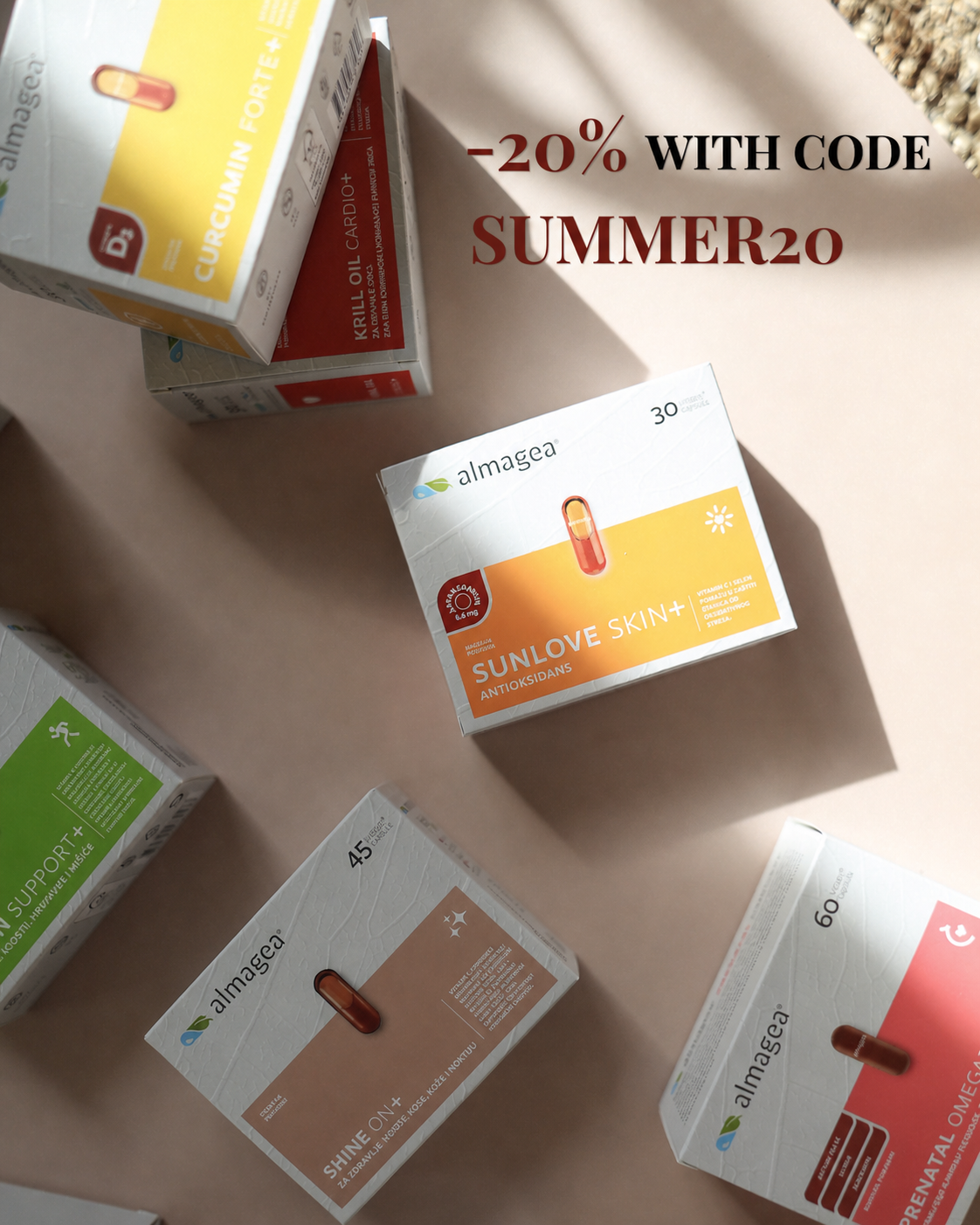
Support for the body's natural defenses with the power of curcumin and vitamin D.
22.47 €

Get to know us
Dietary supplements
Information
Let's connect
© 2024. Almagea d.o.o., Ulica Julija Knifera 4, 10 020 Zagreb
Fixed conversion rate: €1 = HRK 7.5345
buy quickly and safely