

Curcumin and Alzheimer's disease

 7 MIN
7 MIN  ALMAGEA
  09.01.2024
7 MIN ALMAGEA 09.01.2024
Alzheimer's disease (AD) is the most common form of dementia for which there is a limited selection of therapeutic options and drugs. The effectiveness of pharmacotherapy in AD is limited and fraught with side effects and a high price. Therefore, there is great interest in researching alternative therapies and safe natural biologically active compounds that help Alzheimer's dementia.
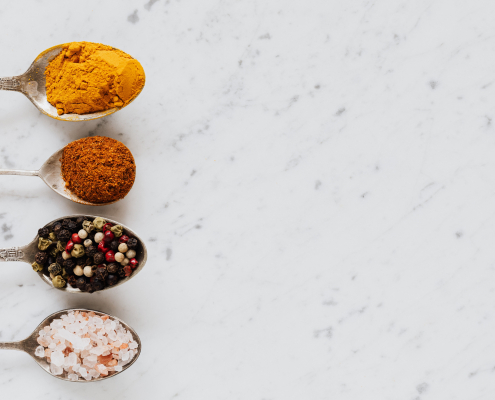
Turmeric root is a well-known culinary ingredient, especially in South Asia. U Ayurveda and in traditional Chinese medicine over the centuries it has been used in the treatment of numerous diseases, and its anti-inflammatory effects and help in wound healing are especially valued.
According to some sources, the lower incidence of Alzheimer's disease in India is attributed to the widespread consumption of turmeric.Namely, the frequency of AD among people aged between 70 and 79 in India is 4.4 times lower compared to the same age group in the USA.
More recent research has linked turmeric consumption in old age with better cognitive functions. Furthermore, some case reports have indicated potential beneficial effects in an experimental model of Alzheimer's disease, and several clinical studies have been initiated in this direction.
According to a more recent study published in 2018 in the magazine The American Journal of Geriatric Psychiatry, daily intake of curcumin through a dietary supplement can improve memory and mood in people with mild age-related memory loss.
40 adults with mild memory loss participated in the study.The subjects were divided into two groups - a placebo group and a group that received 90 mg of bioavailable curcumin twice a day for 18 months. Before the start of the research, the respondents underwent a cognitive test, which was then repeated every 6 months. At the beginning and at the end of the study, the scientists also measured the levels of curcumin in the subjects' blood and subjected them to a computed tomography (CT) scan of the head in order to assess the state of their brains by measuring the levels of tau and amyloid proteins.
Research results after 18 months indicated a 28% improvement in memory in those taking curcumin, accompanied by a slight improvement in mood. Also, by analyzing CT images of the head, scientists observed a reduction in the accumulation of deposits in brain regions responsible for mood and memory.
The scientists conclude that taking a safe dose of curcumin for several years could result in significant cognitive benefits. Precisely because of its anti-inflammatory and antioxidant properties, curcumin is included in the list of potential therapies for depression and Alzheimer's disease.
In vitro studije pokazale su kako kurkumin inhibira agregaciju beta-amiloidnih proteina i beta-amiloidne upale te aktivnost beta – sekretaze i acetilkolinesteraze. U in vivo studies, oral administration of curcumin resulted in reduced beta-amyloid deposition, Aβ oligomerization and tau phosphorylation in the brains of laboratory animals. This resulted in an improvement in the behavior of the observed animals.The aforementioned findings have brought a completely new perspective to curcumin, which is becoming a significant subject of interest in Alzheimer's disease research.

The process by which AD degrades nerve cells involves a number of events:
A study conducted at UCLA showed that curcumin helps macrophages to "clean up" amyloid plaque.Macrophages play an important role in the function of the immune system, and a study by Zhang et al showed how macrophages remove amyloid plaque more effectively in the presence of curcumin.
Several studies have shown that various inflammatory changes occur in Alzheimer's disease; microgliosis, astrocytosis and the presence of proinflammatory substances that promote the deposition of beta-amyloid proteins. Curcumin has a strong anti-inflammatory potential and therefore may have a role in helping patients with AD.
Curcumin exerts its action through:
A study conducted at Jawaharlal Nehru University in India showed that the application of curcumin significantly reduces lipid peroxidation and accumulation of lipofuscin, processes that normally increase with aging. Also, curcumin increases the amount of available superoxide dismutase, a natural body antioxidant that decreases with aging.
Vitamin D, specifically 1,25-dihydroxycholecalciferol, has a wide range of effects in the human body.Although the role of vitamin D is mainly related to the muscular and skeletal system, numerous other effects have recently been proven, such as its benefits for the health of the immune, endocrine and neurological systems.
Even more interesting is the discovery of vitamin D receptors (VDR), which are widely distributed in body cells, and recently it has been known that other molecules can bind to VDR, besides vitamin D itself. American scientists have examined whether curcumin can bind to the VDR receptor, considering that curcumin and vitamin D coincide in their action in several mechanisms. For example, it was discovered that both molecules suppress the activity of NF-kB, a signaling molecule known to stimulate the formation of cancer.Research on column cell culture showed how curcumin really binds to VDR receptors and triggers the same cascade of reactions as vitamin D and ultimately activates genes involved in cancer prevention (CYP3A4, CYP24, p21, TRPV6). On this track, research has been started that uses a combination of curcumin and vitamin D in Alzheimer's disease. Research by Masoumi and colleagues showed a synergistic effect of these two molecules on the immunoprophylaxis of AD via macrophages and accelerated "cleaning" of amyloid plaques.
Author: Prof. Dr.Sc. Darija Vranešić Bender, clinical nutritionist
Literature:
1. Kolev TM, Velcheva EA, Stamboliyska BA, Spiteller M. DFT and experimental studies of the structure and vibrational spectra of curcumin. Int J Quantum Chem. 2005;102:1069–79.
2. Masoumi A, Goldenson B, Ghirmai S, Avagyan H, Zaghi J, Abel K, Zheng X, Espinosa-Jeffrey A, Mahanian M, Liu PT, Hewison M, Mizwickie M, Cashman J, Fiala M. 1alpha,25-dihydroxyvitamin D3 interacts with curcuminoids to stimulate amyloid-beta clearance by macrophages of Alzheimer’s disease patients. J Alzheimers Dis. 2009;17(3):703-17.
3. Mizwicki MT, Menegaz D, Zhang J, Barrientos-Durán A, Tse S, Cashman JR, Griffin PR, Fiala M. Genomic and nongenomic signaling induced by 1α,25(OH)2-vitamin D3 promotes the recovery of amyloid-β phagocytosis by Alzheimer’s disease macrophages. J Alzheimers Dis. 2012;29(1):51-62.
4. Mishra S and Palanivelu K. The effect of curcumin (turmeric) on Alzheimer’s disease: An overview. Ann Indian Acad Neurol. 2008; 11(1): 13–19.
5. Schiborr C, Kocher A, Behnam D, Jandasek J, Toelstede S, Frank J. The oral bioavailability of curcumin from micronized powder and liquid micelles is significantly increased in healthy humans and differs between sexes. Mol Nutr Food Res. 2014;58(3):516-27.
6. Shen L, Liu L, Ji HF. Regulatory effects of curcumin spice administration on gut microbiota and its pharmacological implications. Food Nutr Res.2017 Aug 9;61(1):1361780. doi: 10.1080/16546628.2017.1361780.
7. Small GW, Siddarth P, Li Z, Miller KJ, Ercoli L, Emerson ND, Martinez J, Wong PK et al. Memory and Brain Amyloid and Tau Effects of a Bioavailable Form of Curcumin in Non-Demented Adults: A Double-Blind, Placebo-Controlled 18-Month Trial Am J Geriatr Psychiatry 2018; 26(3): 266–277
8.Zhang L, Fiala M, Cashman J, Sayre J, Espinosa A, Mahanian M, et al. Curcuminoids enhance amyloid -beta uptake by macrophages of Alzheimer’s disease patients. J Alzheimers Dis. 2006;10:1–7.
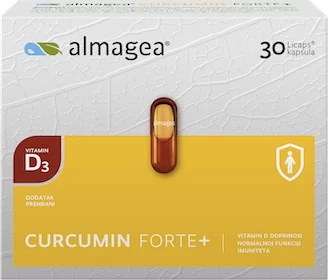
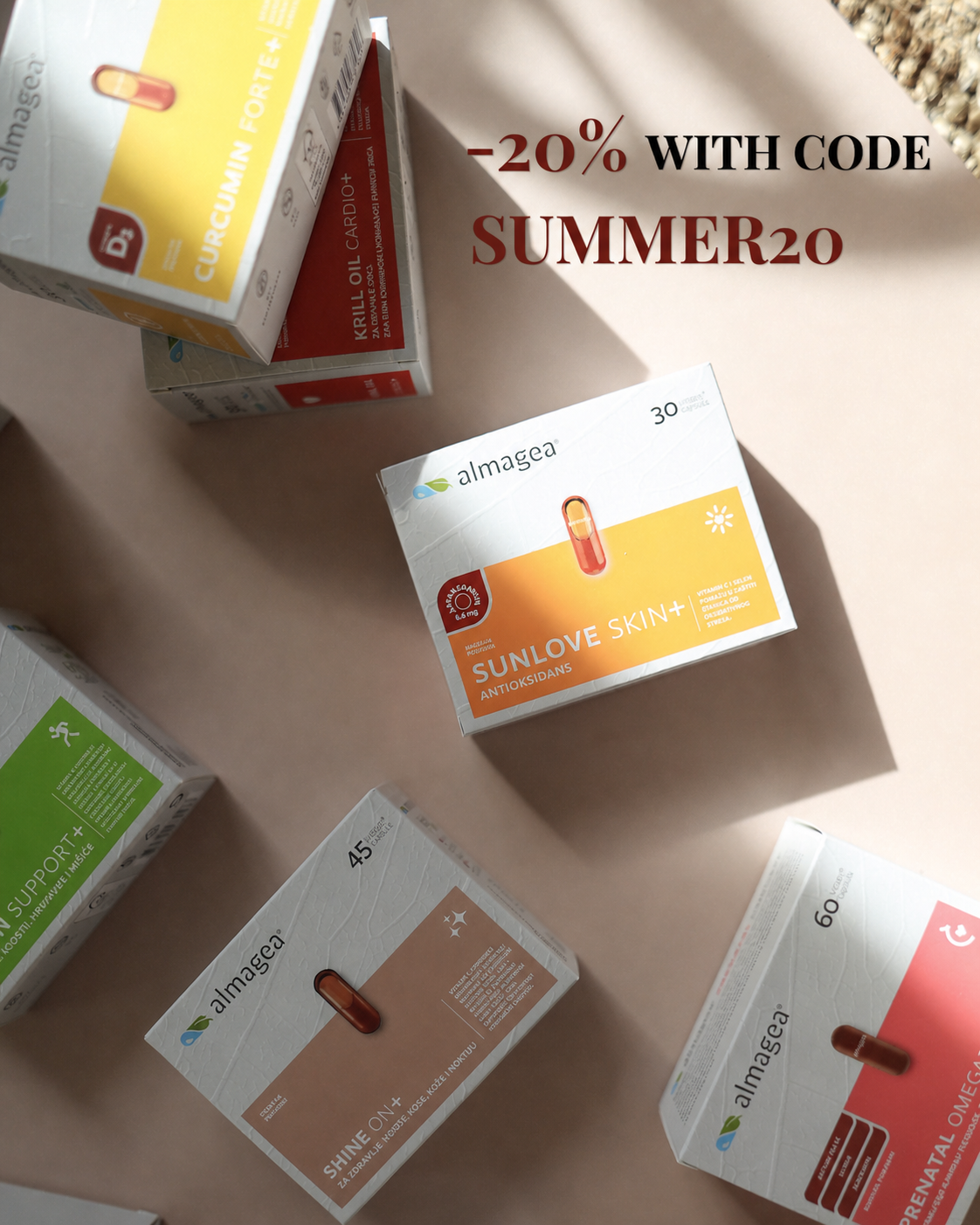
Support for the body's natural defenses with the power of curcumin and vitamin D.
22.47 €

Get to know us
Dietary supplements
Information
Let's connect
© 2024. Almagea d.o.o., Ulica Julija Knifera 4, 10 020 Zagreb
Fixed conversion rate: €1 = HRK 7.5345
buy quickly and safely