
How can curcumin help with polycystic ovary syndrome?

 5 MIN
5 MIN  ALMAGEA
  25.08.2023
5 MIN ALMAGEA 25.08.2023
Polycystic ovary syndrome (PCOS) is the most common disorder of the endocrine system in women of reproductive age. It is estimated that this one the disorder affects 15 to 25% of women, and characterizes it hyperandrogenism i.e. increased production of male sex hormones, disorder ovulation and polycystic ovaries. In addition, in almost half of women, along with PCOS, the development of metabolic syndrome and insulin resistance occurs, and the patients also have an increased risk of developing type 2 diabetes, cardiovascular diseases and cancer.
Polycystic ovary syndrome is a hormonal disorder in which increased activity occurs luteinizing hormones (LH) which stimulates the ovaries to produce male sex hormones, leading to symptoms such as increased hairiness and acne. In addition, the production of follicle-stimulating hormone (FSH) is decreased, and its role is to stimulate the development of follicles.
Every month, a mature egg is released from one follicle into the fallopian tube through ovulation. But in women with polycystic ovary syndrome, insufficiently stimulated follicles do not reach the required size and ovulation often does not occur. An ultrasound examination reveals numerous cyst-like follicles located on the ovaries, from which this syndrome got its name. In addition to the imbalance of sex hormones, with polycystic ovary syndrome, there is also a disorder in the work of the hormone insulin, that is, insulin resistance develops.
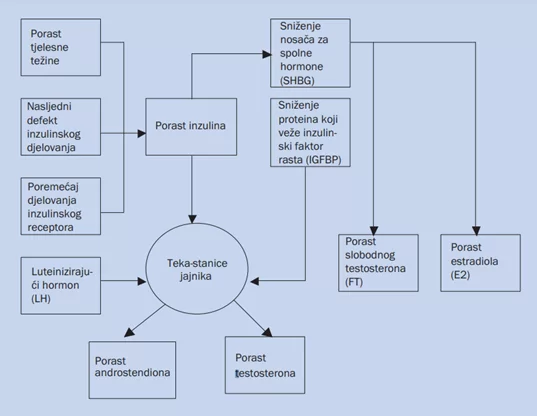
Figure 1: Presentation of the pathogenesis of hyperandrogenemia and hyperinsulinemia in PCOS (Ivana Pentz, Polycystic ovary syndrome, 2010)
Part of the PCOS treatment strategy, in addition to establishing normal ovulation and lowering testosterone levels, involves the use of drugs to lower blood glucose levels and reduce insulin resistance. In the treatment, an important aspect is the control of body mass through a balanced diet and exercise, as well as the use of phytotherapy as supportive therapy.
Turmeric has a long tradition of use in Ayurvedic medicine, and in recent decades it has been frequently researched, and numerous publications can be found in the medical literature that indicate the beneficial effects of turmeric and its polyphenol curcumin in type 2 diabetes. Several studies have shown that curcumin has antidiabetic properties and that it can reduce the level cholesterol and triglycerides in plasma, and there is evidence that curcumin works anti-inflammatory and can reduce oxidizing stress and inflammation which underlies PCOS and is associated with complications.
Among the conducted clinical researches, two researches by Iranian scientists are the most significant. The first study by Heshmati and colleagues, published in 2020, included 67 subjects diagnosed with PCOS. In the research that lasted three months, the test subjects were divided into two groups. The first group consumed 1500 mg of curcumin divided into 3 daily doses, while the second group consumed a placebo. Scientists have studied the impact of curcumin on genes and enzymes which make the first line of defense against oxidative stress. These are detoxification enzymes like glutathione peroxidase and receptors PPARα which plays a role in fat and lipid metabolism and enhances the action of superoxide dismutase and glutathione peroxidase.
In another large clinical study by Jamilian and colleagues, published in 2020, 60 women divided into two groups participated. The first group consumed 500 mg of curcumin for 12 weeks, while the second group consumed a placebo.
In addition to clinical research, an interesting study was conducted on mice that compared the effects of metformin and turmeric extract. Metformin is a drug used in the treatment of type 2 diabetes, and in women with polycystic ovary syndrome, it is also used to lower insulin and blood glucose levels. Turmeric extract showed better effect in treating PCOS and inducing ovulation compared to metformin. Turmeric extract improved hormonal status, reduced the level lipids in blood, improved control glucose in the blood and antioxidant status organism, and also improved look ovaries that is, the number of cysts decreased.
Two large systematic reviews with meta-analysis published in reputable professional journals, combining the clinical research published so far, came to the conclusion that the intake of curcumin in the form of a dietary supplement can improve glycemic control and metabolism lipids, but also positively affect inflammatory markers in serum and on control physical masses a person with polycystic ovary syndrome. Both analyzes also concluded that the use of curcumin is completely safe and does not cause harmful side effects.
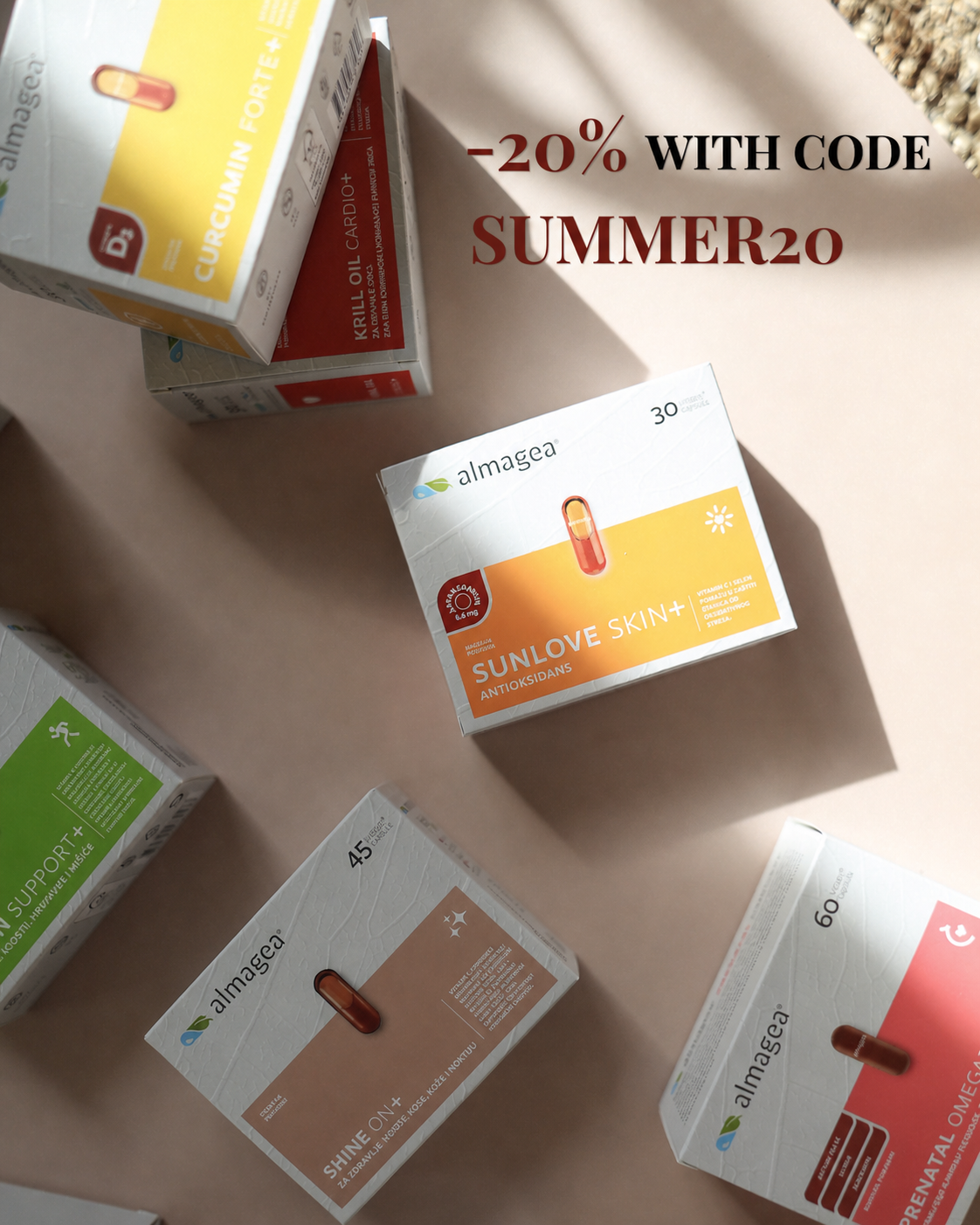
Advantages of Almagea Curcumin Forte+: Curcumin Forte+ is a food supplement that contains an innovative form of polyphenol curcumin with high bioavailability in the body. In addition to curcumin, Curcumin Forte+ is enriched with vitamin D, whose status in women with polycystic ovary syndrome is extremely important because its deficiency leads to insulin resistance and other features of polycystic ovary syndrome.
Literature:
Jamilian M, Foroozanfard F, Kavossian E, Aghadavod E, Shafabakhsh R, Hoseini A, Asemi Z. Effects of curcumin on body weight, glycemic control and serum lipids in women with polycystic ovary syndrome: A randomized, double-blind, placebo-controlled trial. Clin Nutr ESPEN. 2020 Apr;36:128-133. doi: 10.1016/j.clnesp.2020.01.005. Epub 2020 Jan 30. PMID: 32220355.
Heshmati J, Golab F, Morvaridzadeh M, Potter E, Akbari-Fakhrabadi M, Farsi F, Tanbakooei S, Shidfar F. The effects of curcumin supplementation on oxidative stress, Sirtuin-1 and peroxisome proliferator activated receptor γ coactivator 1α gene expression in polycystic ovarian syndrome (PCOS) patients: A randomized placebo-controlled clinical trial. Diabetes Metab Syndr. 2020 Mar-Apr;14(2):77-82. doi: 10.1016/j.dsx.2020.01.002. Epub 2020 Jan 8. PMID: 31991296.
Shah MZUH, Shrivastava VK. Turmeric extract alleviates endocrine-metabolic disturbances in letrozole-induced PCOS by increasing adiponectin circulation: A comparison with Metformin. Metabol Open. 2021 Dec 20;13:100160. doi: 10.1016/j.metop.2021.100160. PMID: 35005596; PMCID: PMC8717583.
Shen W, Qu Y, Jiang H, Wang H, Pan Y, Zhang Y, Wu X, Han Y, Zhang Y. Therapeutic effect and safety of curcumin in women with PCOS: A systematic review and meta-analysis. Front Endocrinol (Lausanne). 2022 Oct 27;13:1051111. doi: 10.3389/fendo.2022.1051111. PMID: 36387924; PMCID: PMC9646792.
Chien YJ, Chang CY, Wu MY, Chen CH, Horng YS, Wu HC. Effects of Curcumin on Glycemic Control and Lipid Profile in Polycystic Ovary Syndrome: Systematic Review with Meta-Analysis and Trial Sequential Analysis. Nutrients. 2021 Feb 21;13(2):684. doi: 10.3390/nu13020684. PMID: 33669954; PMCID: PMC7924860.
Trummer C, Pilz S, Schwetz V, Obermayer-Pietsch B, Lerchbaum E. Vitamin D, PCOS and androgens in men: a systematic review. Endocr Connect. 2018 Mar;7(3):R95-R113. doi: 10.1530/EC-18-0009. Epub 2018 Feb 15. PMID: 29449314; PMCID: PMC5854850.
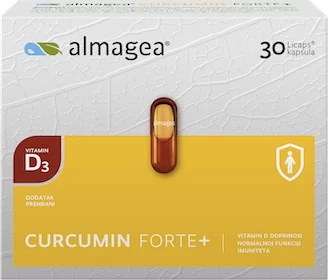
Support for the body's natural defenses with the power of curcumin and vitamin D.
22.47 €

Get to know us
Dietary supplements
Information
Let's connect
© 2024. Almagea d.o.o., Ulica Julija Knifera 4, 10 020 Zagreb
Fixed conversion rate: €1 = HRK 7.5345
buy quickly and safely