Bioraspoloživost kurkumina – ključna karakteristika za učinkovitost

 5 MIN
5 MIN  ALMAGEA
  09.01.2024
5 MIN ALMAGEA 09.01.2024
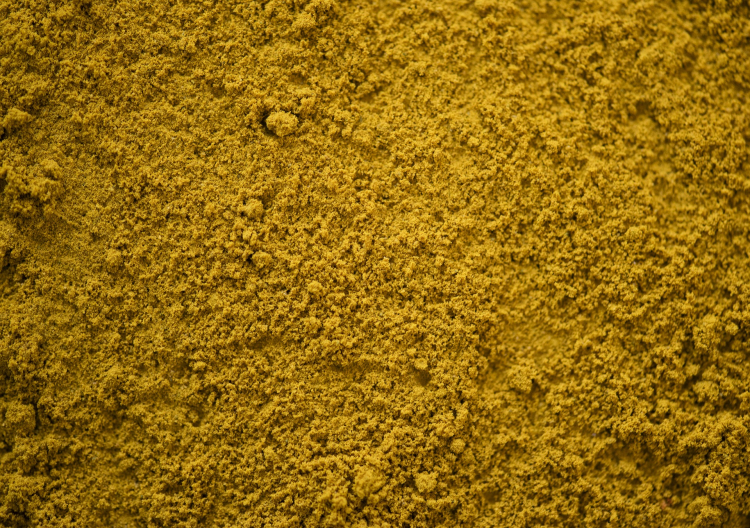
Turmeric (lat. Curcuma longa) is a spice obtained from the underground tree (rhizome) of the plant of the same name characteristic of India and Southeast Asia. Turmeric owes its characteristic yellow color to the polyphenol curcumin, a biologically active polyphenol from the curcuminoid group that is attributed with strong anti-inflammatory and antioxidant effects.
It has a wide spectrum of biological effects:
Furthermore, it can be useful for:
Physiologically, it is extremely well tolerated, it has negligible systemic toxicity even after high orally administered doses (up to 12 g).However, all these positive effects are difficult to express by using the usual forms and extracts of turmeric due to its very low solubility in water and limited bioavailability (1). Therefore, during the past decades, several groups of scientists are continuously engaged in the development of new bioavailable forms of curcumin, and among them the German group led by prof. Jan Frank from the University of Hohenheim from the Institute for Biological Chemistry and Nutrition Science.
His multi-year work on a project to study the specific characteristics of curcumin resulted in knowledge about the superiority of the highly bioavailable curcumin solubilized form in micelles. It has that shape 185x higher bioavailability compared to the native form (2), and it is a protected and patented substance NovaSOL®.

Curcumin stands out as one of the most versatile natural ingredients with diverse biologically beneficial effects and pharmacological action. However, the native form is poorly soluble in water, unstable at the acidic pH that is characteristic of the stomach, and is very quickly metabolized in the liver and excreted in the feces, which is why the bioavailability of native curcumin is quite low.
Since the poor bioavailability limits the therapeutic benefit of curcumin, numerous attempts have been made to increase the absorption of the ingredient. Some of these approaches are combining curcumin with other substances due to increased bioavailability, for example with piperine (an alkaloid from black pepper) and turmeric ingredients that do not belong to the curcuminoid group, which resulted in a certain increase in bioavailability.
However, the greatest contribution to the bioavailability of curcumin was provided by the application of new technologies, as it brings new, highly useful forms of curcumin, and one of the newest and most effective forms is curcumin solubilized in micelles. In this way, it is possible for curcumin, which is normally insoluble in water, to become soluble in water.
Superior bioavailability of curcumin in micelles (NovaSOL® Curcumin) was proven by a study in which 23 subjects took part in a random order a single dose of 500 mg curcuminode in the form of native curcumin, micronized curcumin powder or curcumin solubilized in micelles (NovaSOL® Curcumin). It was the solubilized form of curcumin in micelles that showed superior bioavailability compared to other forms of curcumin, i.e. it had 185 times greater availability than native curcumin (Figure 1). NovaSOL® Curcumin contained a standardized amount of curcuminoids (83% curcumin, 15% demethoxycurcumin (DMC) and 2% bisdemethoxycurcumin (BDMC)), and it was these curcuminoids that were measured in the plasma of healthy volunteers, which further supports the improved absorption.Furthermore, the study showed that there was no negative effect on liver and kidney function (2).

Solubilization is a phenomenon by which otherwise insoluble substances can be dissolved in a surfactant micellar solution in water.Micelles are particles that behave in aqueous solutions in such a way that the hydrophilic ends are directed towards the surface of the micelle, while the hydrophobic ends are directed towards the center. In this way, it is ensured that a component that is normally insoluble, such as curcumin, becomes soluble in water.
In order to obtain a crystal-clear curcumin solubilizer, it is essential to use a surfactant - a substance that reduces surface tension, and the oleic acid salt (polysorbate) is used as a suitable and effective substance. In this way, curcumin is completely unmodified, its original structure is unchanged, and at the same time its availability for the body is significantly changed.

A group of scientists led by prof.During the last few years, Jan Frank has published several scientific studies in which the bioavailability of the micellar form of curcumin was investigated, most often on cancer cells. Below is a brief overview of the latest research:
Author: Assoc. Ph.D.Sc. Darija Vranešić Bender, clinical nutritionist
Literature:
1. Hani U, Shivakumar HG. Solubility enhancement and delivery systems of curcumin a herbal medicine: a review. Curr Drug Deliv. 2014;11(6):792-804.
2. Schiborr C, Kocher A, Behnam D, Jandasek J, Toelstede S, Frank J. The oral bioavailability of curcumin from micronized powder and liquid micelles is significantly increased in healthy humans and differs between sexes. Mol Nutr Food Res. 2014;58(3):516-27.
3. Aggarwal BB, HarikumarKB Potential Therapeutic Effects of Curcumin, the Anti-inflammatory Agent, Against Neurodegenerative, Cardiovascular, Pulmonary, Metabolic, Autoimmune and Neoplastic Diseases. Int J Biochem Cell Biol. 2009; 41(1): 40–59.
4. Frank J, Schiborr C, Kocher A, Meins J, Behnam D, Schubert-Zsilavecz M,, Abdel-Tawab M.Transepithelial Transport of Curcumin in Caco-2 Cells Is Significantly Enhanced by Micellar Solubilization. Plant Foods Hum Nutr. 2016 Nov 29
5. Bortel N, Armeanu-Ebinger S, Schmid E, Kirchner B, Frank J, Kocher A, Schiborr C, Warmann S, Fuchs J, Ellerkamp V. Effects of curcumin in pediatric epithelial liver tumors: inhibition of tumor growth and alpha-fetoprotein in vitro and in vivo involving the NFkappaB- and the beta-catenin pathways. Oncotarget. 2015 1;6(38):40680-91.
6. Dützmann S, Schiborr C, Kocher A, Pilatus U, Hattingen E, Weissenberger J, Geßler F, Quick-Weller J, Franz K, Seifert V, Frank J, Senft C. Intratumoral Concentrations and Effects of Orally Administered Micellar Curcuminoids in Glioblastoma Patients. Nutr Cancer. 2016;68(6):943-8.
7.Hagl S, Kocher A, Schiborr C, Kolesova N, Frank J, Eckert GP. Curcumin micelles improve mitochondrial function in neuronal PC12 cells and brains of NMRI mice – Impact on bioavailability.Neurochem Int. 2015;89:234-42.
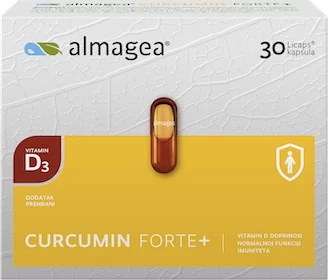
Support for the body's natural defenses with the power of curcumin and vitamin D.
22.47 €

Get to know us
Dietary supplements
Information
Let's connect
© 2024. Almagea d.o.o., Ulica Julija Knifera 4, 10 020 Zagreb
Fixed conversion rate: €1 = HRK 7.5345
buy quickly and safely