

Natural preparations to help with metabolic syndrome (MetS)

 10 MIN
  ALMAGEA
  15.01.2024
10 MIN ALMAGEA 15.01.2024
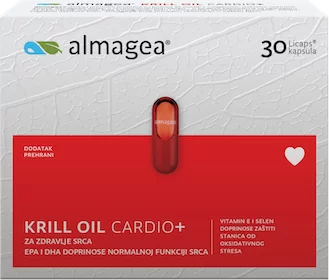
Povišeni krvni tlak, previše kilograma, abdominalna pretilost, loša kontrola glukoze i lipida u krvi, masna infiltracija jetre – sve su to tekovine obilja i modernog života, a kada se više tih tegoba javi u kombinaciji govorimo o metabolic syndrome. Each of the mentioned health problems individually increases the risk of developing diseases, such as diabetes and heart disease, but combined they increase the risk of developing the disease several times. The priority is, therefore, to normalize the determinants of metabolic syndrome, and along with weight loss and proper nutrition, scientific studies show that shrimp wing oil can be helpful.
Metabolički sindrom indikacija je u kojoj ulje krila može naći primjenu zbog brojnih povoljnih učinaka. Neupitan je učinak omega-3 masnih kiselina na razinu triglicerida, a visoka razina triglicerida povezuje s inzulinskom rezistencijom, dijabetesom tipa 2, aterosklerozom i bolestima srca i krvnih žila. Osim povoljnog djelovanja omega-3 masnih kiselina, znanstvenici smatraju kako blagotvornom učinku ulja račića krila doprinosi i sadržaj astaksantina – snažnog antioksidansa koji je odgovoran za crvenu boju račića, ali i ulja.
It is known that the background of metabolic syndrome is inflammation, and any anti-inflammatory action can have a beneficial effect. Furthermore, some studies have indicated the potential effect of krill oil on body composition and abdominal obesity.Numerous scientists dealing with the endocannabinoid system believe that there is a solid basis for considering krill oil as a possible nutritional intervention aimed at reducing systemic inflammation and cardiometabolic factors in obese individuals who are at risk of developing metabolic syndrome and cardiovascular disease.
On the other hand, fatty infiltration of the liver and nonalcoholic steatohepatitis are considered liver manifestations of metabolic syndrome, a intervention with omega-3 fatty acids is now being considered as a potential therapeutic option with that increasingly frequent health problem.In several animal model studies, krill oil has shown a beneficial effect on fatty infiltration of the liver.
A study published in 2009 in a reputable journal The Journal of Nutrition found that the intake of omega-3 fatty acids in the form of shrimp krill oil can significantly reduce the level of pro-inflammatory substances that are associated with poor glucose control, blood lipid disorders and non-alcoholic liver disease. Several more studies have confirmed that the reduction of pro-inflammatory substances, i.e. endocannabinoids, is one of the reasons for the positive effect of shrimp wing oil on metabolic syndrome, especially in obese people. One of them was published in a magazine Nutrition and Metabolism in 2011. The study involved 63 subjects who took either 2 g of shrimp oil per day, or fish oil or olive oil. Shrimp wing oil, unlike fish and olive oil, reduced the level of endocannabinoid compounds in plasma, exclusively in obese subjects.
The dosage of krill oil in metabolic syndrome is individual, for preventive purposes 500-1000 mg of krill oil is recommended, and for therapeutic purposes it is usually applied in doses of 1-2 g. Even in very high doses, of 8 g per day, the use of krill has been shown to be safe in numerous studies. The only caution is required in the case of a known allergy to crustaceans and anticoagulant therapy.
Chromium is a mineral that the human body needs in trace amounts, although the mechanism of action itself is not yet fully understood. The biological role was first proposed in 1954, but chromium was accepted as an essential nutrient only in 1977, when abnormalities in glucose metabolism were observed in patients on total parenteral (intravenous) nutrition, which disappeared after chromium supplementation.
In addition to the positive effect on glucose levels, a clinical study from 2011 showed that the intake of chromium in the form of a dietary supplement also has an effect on lipids in the blood. The results of a study involving 40 subjects diagnosed with type 2 diabetes showed that chromium intake over a period of 3 months, in the amount of 42 µg per day, improved blood glucose values and significantly reduced total cholesterol, triglycerides and LDL cholesterol compared to placebo. A meta-analysis of 11 clinical studies published in 2013 also showed the positive impact of chromium intake in the form of a dietary supplement on body weight reduction compared to placebo.in the magazine Obesity Reviews.
Today, it is known that chromium stimulates the activity of insulin, a hormone with a key role in the metabolism and storage of carbohydrates, fats and proteins in the body.
Utilization of glucose from the bloodstream is also important for proper muscle function. It is believed that chromium can also participate in cholesterol metabolism, which means that it also plays a role in maintaining normal blood cholesterol levels.
Chromium deficiency causes insulin resistance (a condition in which the body's cells do not respond to the presence of insulin) and disturbances in lipid metabolism, which can be improved by taking chromium in the form of a dietary supplement, and the recommended daily intake is 40 µg. Research shows that a large number of people do not get enough chromium through their diet, since chromium is removed by numerous food processing methods.The fact that chromium from food generally has low bioavailability also contributes to the deficiency problem. therefore supplementation through dietary supplements may be beneficial.
L-carnitine is a substance that is formed from the essential amino acids lysine and methionine by means of vitamin B6, niacin and iron. Vitamin C also participates in the process, moreover, one of the earliest symptoms of vitamin C deficiency, fatigue, is associated with reduced synthesis of L-carnitine.
In other words, L-carnitine promotes the oxidation of fatty acids and thus helps the body in the production of energy and is necessary for the function of the heart and brain, as well as movement. Therefore, it is not surprising that the highest concentration of L-carnitine is precisely in the tissues that primarily use fatty acids as a source of energy, such as skeletal and heart muscles.If there is not enough carnitine, fats are not used to create energy, but are increasingly deposited in muscles and fatty tissues.
The use of L-carnitine can also be beneficial when it comes to the health of the heart and blood vessels. Namely, there is solid scientific evidence that supports the ability of carnitine to reduce the level of cholesterol in the blood and increase the level of the so-called "good" HDL cholesterol. Additionally, it is believed that carnitine can be useful in recovering from a heart attack and reducing the symptoms of angina pectoris. In general, L-carnitine has a long history of use in cardiology, especially in parenteral form. In animal model studies, l-carnitine has been shown to be useful in the treatment of dyslipidemia, obesity, and nonalcoholic fatty liver disease, all determinants of the metabolic syndrome.
An interesting study was recently published in the journal Biological Traces Element Research. The research was carried out on experimental animals and the influence of chromium supplementation (through chromium-enriched yeast at a dose of 300 µg/kg) and/or L-carnitine (100 mg/kg) on glucose and fat metabolism was studied. After 56 days of research in experimental animals that received chromium and/or L-carnitine in the form of a dietary supplement, a significant reduction in the proportion of fat tissue in the abdominal area was found compared to the control group. Also, intake of chromium and/or L-carnitine significantly reduced the levels of triglycerides and total cholesterol and simultaneously increased the level of HDL cholesterol and free fatty acids in the serum. Additionally, chromium and/or L-carnitine supplements are associated with greater insulin sensitivity and good blood glucose control.
Although the research was conducted on animals and further studies are needed to be able to know for sure the influence of chromium and L-carnitine on glucose and lipids, the results indicate that taking chromium and/or L-carnitine in the form of a dietary supplement can have a positive effect on fat and glucose metabolism.
Author: Prof. Dr.Sc. Darija Vranešić Bender, clinical nutritionist
Literature:
1. Berge, K. et al. Chronic treatment with krill powder reduces plasma triglyceride and anandamide levels in mildly obese men. Lipids Health Dis. 2013; 12:78.
2. Batetta B, Griinari M, Carta G, Murru E, Ligresti A, Cordeddu L, Giordano E, Sanna F, Bisogno T, Uda S, Collu M, Bruheim I, Di Marzo V, Banni S. Endocannabinoids may mediate the ability of (n-3) fatty acids to reduce ectopic fat and inflammatory mediators in obese Zucker rats. J Nutr. 2009;139(8):1495-501.
3.Piscitelli F, Carta G, Bisogno T, Murru E, Cordeddu L, Berge K, Tandy S, Cohn JS, Griinari M, Banni S, Di Marzo V. Effect of dietary krill oil supplementation on the endocannabinoidome of metabolically relevant tissues from high-fat-fed mice. Nutr Metab. 2011 13;8(1):51.
4. Hua Y. Molecular Mechanisms of Chromium in Alleviating Insulin Resistance. J Nutr Biochem. 2012; 23(4):313-319.
5. Sharma S. Beneficial effect of chromium supplementation on glucose, HbA1C and lipid variables in individuals with newly onset type-2 diabetes. J Trace Elem Med Biol. 2011; 25(3):149-53.4.
6. Onakpoya I. Chromium supplementation in overweight and obesity: a systematic review and meta-analysis of randomized clinical trials. Obes Rev. 2013; 14(6):496-507.
7. Panchal SK, Poudyal H, Ward LC, Waanders J, Brown L.Modulation of tissue fatty acids by L-carnitine attenuates metabolic syndrome in diet-induced obese rats. Food Funct. 2015 Aug;6(8):2496-506.
8. Zhou, B et al. Effect of dietary yeast chromium and L-carnitine on lipid metabolism of sheep. Bio Trace Elem Res. 2013;55(2):221-7.


Get to know us
Dietary supplements
Information
Let's connect
© 2024. Almagea d.o.o., Ulica Julija Knifera 4, 10 020 Zagreb
Fixed conversion rate: €1 = HRK 7.5345
buy quickly and safely