
Supportive form of therapy in psoriasis

 7 MIN
7 MIN  ALMAGEA
  16.01.2024
7 MIN ALMAGEA 16.01.2024
Psoriasis is a common chronic inflammatory skin disease that usually follows a course of remission and exacerbation. The most common type of psoriasis is characterized by spots with distinct borders that can be pink or gray with silvery scaly skin. These spots can also cause localized hyperpigmentation. Symptoms can first appear at any age, however, they most often appear in early adulthood or later in life, during the 50s to 60s.
Several studies have demonstrated the role of astaxanthin in improving appearance. We will single out three studies:
When taking astaxanthin, it would be good to pay attention to whether the preparation contains natural or synthetic astaxanthin. Namely, it is synthetically obtained from petrochemicals and has a 20 times weaker effect than the natural one.
Source: Journal of Dermatological Science 2010 May;58(2):136-42.
Astaxanthin, a pigment from the carotenoid family, is mainly found in algae - Haematococcus pluvialis - which feed on fish like salmon. Its antioxidant effect is up to 500 times stronger than that of vitamin E.
Research conducted on 42 women with an average age of 21, which lasted 8 weeks, showed that the consumption of a few milligrams of astaxanthin has a significant effect on the body's defense mechanisms. Several indicators were observed: 8-OHdG (8 hydroxy-2-deoxyguanosine), CRP (C reactive protein), NK cells and T and B lymphocytes. 8-OhdG, a direct indicator of DNA damage, in the group that received 2 mg per day dropped by 32% and at 8 mg per day by as much as 43%. CRP, an indicator of inflammation, was significantly reduced, and the activity of T and B lymphocytes and NK cells was significantly increased.
Source: Park JS, Chyun JH, Kim YK, Line LL, Chew BP. (2010) Astaxanthin decreased oxidative stress and inflammation and enhanced immune response in humans. Nutr. Metab. Mark 5; 7:18.
Psoriasis is a chronic inflammatory skin disease that affects 2-3% of the population, greatly reduces the quality of life and usually lasts a lifetime, and 10-30% of patients develop psoriatic arthritis. The clinical results of conventional therapy of more severe forms of psoriasis are not satisfactory and there is a problem of toxicity of the drugs used, so patients often use herbal preparations, nutritional supplements (eg omega-3 fatty acids and β-carotene) and specific diets.
A new study on a group of 58 patients with severe forms of psoriasis shows for the first time that a combination of antioxidants and conventional therapy improves the condition and simultaneously reduces the level of oxidative stress.The subjects were given coenzyme Q for a month10 (50 mg/d), vitamin E (50 mg/d) and selenium (48 µg/d).
Taking nutrients in the form of dietary supplements has significantly reduced markers of oxidative stress and is emerging as a useful additional, supportive form of therapy in people with a severe form of psoriasis.
Selenium is a trace element that affects the immune system. Namely, according to the study, lower selenium is associated with a 60% lower risk of skin cancer. The study involved 485 adult subjects who were divided into three groups with regard to the concentration of carotenoids, vitamin E and selenium in the serum.
The risk of skin cancer was monitored over a period of 8 years.Although no influence of carotenoid and vitamin E levels on the incidence of cancer was observed, the concentration of selenium in the serum had an inversely proportional influence on the occurrence of skin cancer. In particular, compared to subjects who had the lowest level of selenium (0.4-1.0 µmol/L), those with the highest level of selenium in the serum (1.3-2.8 µmol/L) were even 60% less likely to suffer from skin cancer.
Source: Van der Pols JC, Heinen MM, Hughes MC, Ibiebele TI, Marks GC, Green AC. (2009) Serum antioxidants and skin cancer risk: an 8-year community-based follow-up study. Cancer Epidemiol. Biomarkers Prev. Apr;18(4):1167-73.
Selenium is an essential element found in the body in small amounts. However, it has many important tasks in the body. Selenium is an integral part of the enzyme called glutathione peroxidase and as such contributes to the protection of cells from oxidative stress.
Another important property of selenium is that it contributes to the maintenance of normal hair and nails, so, for example, an insufficient intake of selenium can be manifested by loss of hair color or a change in the color of nails.
Author: Vitaminoteka nutritionist team
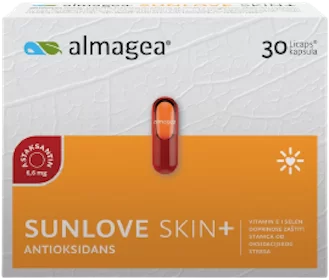
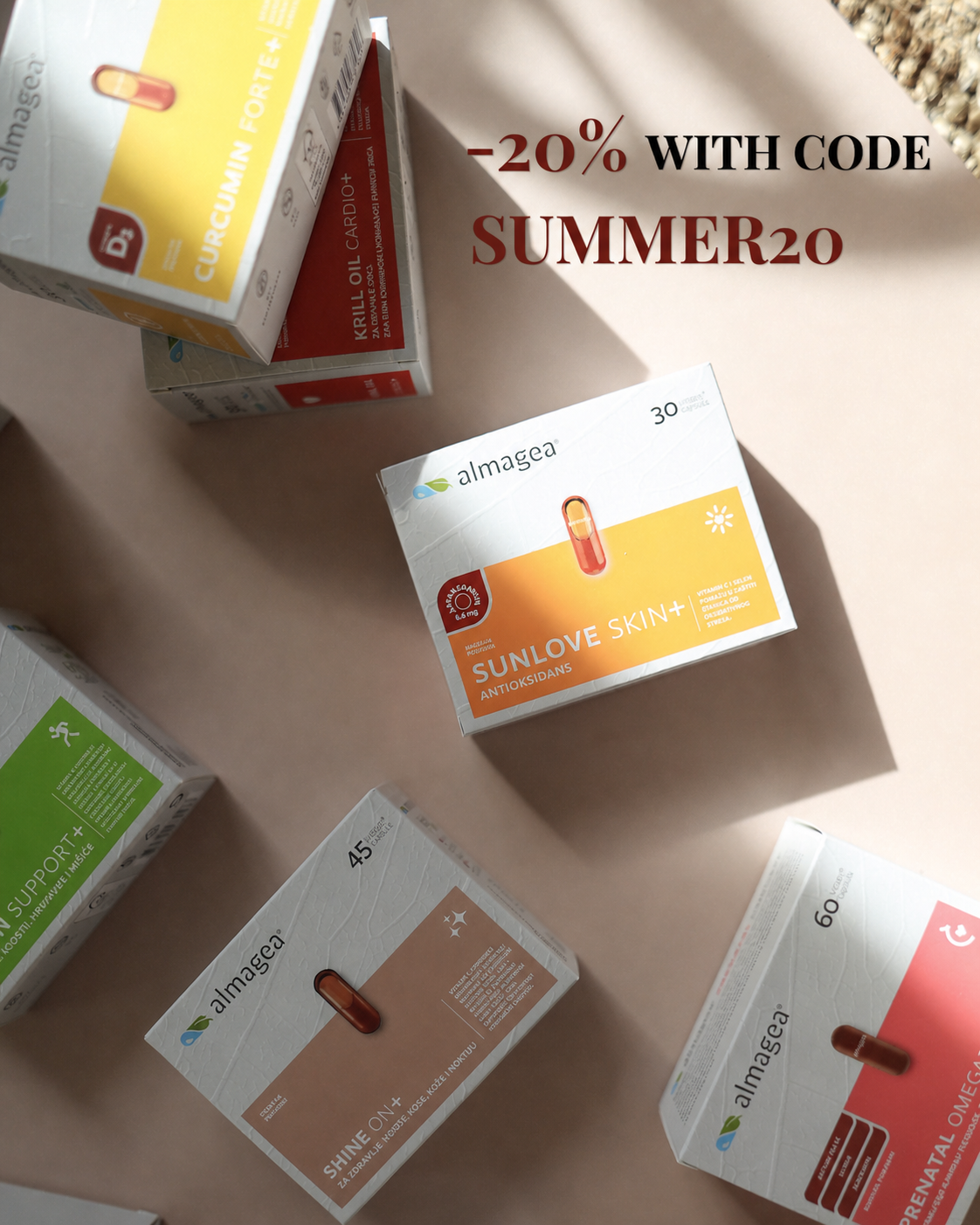
Skin care from the inside all year round and protection against oxidative stress.
23.98 €

Get to know us
Dietary supplements
Information
Let's connect
© 2024. Almagea d.o.o., Ulica Julija Knifera 4, 10 020 Zagreb
Fixed conversion rate: €1 = HRK 7.5345
buy quickly and safely