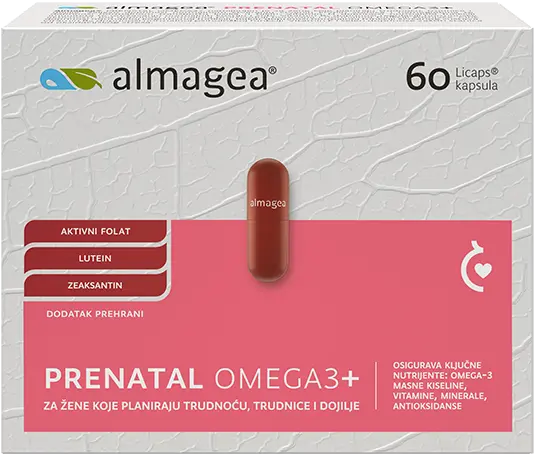


Omega-3 fatty acids and early brain development

 5 MIN
5 MIN  ALMAGEA
  18.01.2024
5 MIN ALMAGEA 18.01.2024
Omega-3 polyunsaturated fatty acids are of particular importance in the diet of pregnant women and small children for two major reasons. Primarily, omega-3 fatty acids play an important role in building cells and regulating important life processes, and not least, because the human body cannot create (synthesize) them by itself and is completely dependent on food intake.
During prenatal development, brain cells are produced at an astonishing rate of about 250,000 cells per minute. In the middle of pregnancy (at the end of the twentieth week of fetal development), billions of neurons have been created. The influence of a child's diet on brain development is greatest in the prenatal period. Quality nutrition and good health are closely related throughout life, but this connection is most pronounced in the first years of life. Poor quality nutrition causes weaker cognitive development, lowers attention and concentration, and reduces success in later life. At birth, the brain reaches 70% of the size and 25% of the weight of the adult brain. In the period that follows, new brain cells (neurons) are created that travel to their final destinations. Stimulated by external stimuli, brain cells create mutual connections (synapses), which enables them to communicate with each other.
During the mentioned period, you should avoid consuming long-lived fish (predators) because they contain an increased concentration of mercury that is naturally found in the environment. Smaller blue fish (sardines) are an excellent source of omega 3 fatty acids. They are broken down in the body into docosahexaenoic acid (DHA) and eicosapantean acid (EPA). DHA makes up over 50% of the building material of the brain and about 65% of the background of the eye. In addition to representing a building part of the brain, the aforementioned breakdown products of omega 3 fatty acids, accessing DNA, participate in complex processes of regulation of gene activation.Therefore, their importance is exceptional in the complex processes of brain development, and in addition to consuming food rich in these fats (good sources are olive oil, almonds, linseed and hemp oil), it is recommended to additionally take omega-3 in the form of capsules or oil during the last trimester of pregnancy (when the brain grows the fastest) and breastfeeding. The latest research has shown that taking omega-3 fatty acids during pregnancy significantly reduces the frequency of premature birth. When it comes to brain health and creating optimal conditions for its growth and development, premature birth brings numerous complications that can have an unfavorable impact. There is about 30 times more DHA in human milk than in the milk of other mammals. By consuming omega-3 fatty acids, the mother can increase the concentration of DHA in her milk and replenish her own reserves, which are significantly reduced after childbirth.The importance of these fats is so great that all substitute milk preparations (formulas) are additionally enriched with them.
The immune system is closely related to the brain, therefore disorders in one of these two systems directly affect the functioning of the other. Omega-3 fatty acids play an important role in the complex processes of mutual regulation. They can reduce the production of unwanted pro-inflammatory hormones (reduce the inflammatory reaction), strengthen the immune system and help with allergies, rheumatism, psoriasis and inflammatory bowel diseases. Some children with autism have associated problems with the immune system, and it is extremely important to prevent the onset of inflammation (for example, they often have inflammatory bowel disease) so that inflammatory products do not spread through the blood to the brain and cause additional damage.
There are many reports in the literature about the benefits of the therapeutic use of omega-3 fatty acids in children with learning difficulties, hyperactivity, autistic spectrum and delayed speech development, but there is still no confirmation in works that meet the strictest criteria of scientific research and conclusions.
Author: Prof. Ph.D. Milivoj Jovančević, primarius


Get to know us
Dietary supplements
Information
Let's connect
© 2024. Almagea d.o.o., Ulica Julija Knifera 4, 10 020 Zagreb
Fixed conversion rate: €1 = HRK 7.5345
buy quickly and safely