

New insights into the effects of astaxanthin on skin health

 5 MIN
5 MIN  ALMAGEA
  16.01.2024
5 MIN ALMAGEA 16.01.2024
Astaxanthin is one of the most famous plant pigments from the group of carotenoids produced by plants and microalgae, and it is interesting that the red color of crustaceans, such as shrimp, crabs and lobsters, comes from this pigment. The best natural source of astaxanthin, which contains more than 80% of this pigment in its cells and is therefore used for commercial production, is microalgae Haematococcus pluvialis.
Astaxanthin effectively protects cell membranes, and its basic property is a strong antioxidant activity that has a potentially beneficial effect on numerous health problems. Scientific literature speaks in favor of astaxanthin and emphasizes its protective effect on the prevention of damage caused by UV radiation, anti-inflammatory and strong antioxidant activity.
Atopic dermatitis is a chronic inflammatory skin disease, and astaxanthin, as a carotenoid with anti-inflammatory effects, works favorably in this condition by reducing the production of inflammatory mediators. Research has shown that astaxanthin suppresses the production of inflammatory mediators such as TNF-α, prostaglandins, leukotrienes and interleukins.
The group of carotenoids, especially astaxanthin, also show anti-allergic effects in sun allergies. Namely, in the case of sun allergies, the immune system reacts unusually to the changes that occur on the skin due to exposure to the sun.The strong antioxidant effect of astaxanthin is also manifested by the reduction of the negative effect of UV rays on the immune functionality of the skin it also gives this pigment an effect against allergic reactions on the skin.
In research, astaxanthin has also been shown to be useful in protecting against UV radiation. Namely, in research on animals it was discovered that astaxanthin accumulates in the skin and can prevent the harmful effects of UV radiation on the metabolism of filaggrin, a protein that maintains the moisture and acidic pH of the skin, and on peeling of the skin. Oral intake of astaxanthin protects the skin from signs of photoaging such as the appearance of wrinkles and a damaged skin barrier.
Recent studies provide insight into some new knowledge about the protective effect of astaxanthin on the skin from UV radiation.That is the goal of a double-blind placebo-controlled study published in the journal Nutrients was to determine the impact of taking astaxanthin in the form of a dietary supplement on the condition of the skin exposed to the mentioned type of radiation. In this Japanese study, which lasted 10 weeks, 23 subjects between the ages of 30 and 59 participated, who were divided into two groups. The first group received 4 mg astaxanthin capsules, while the second group received a placebo. The scientists observed the following parameters - the minimum erythema dose (MED, Eng. minimum erythrema dose), i.e. the amount of UV-radiation necessary for the appearance of skin redness, and changes in humidity and transdermal water loss caused by UV-radiation at the beginning and after 9 weeks of supplementation. Furthermore, using a visual analogue scale, the subjects also gave a subjective opinion about the condition of their skin.
The results showed that the test subjects in the astaxanthin group, compared to the placebo group, had to be irradiated with a much larger amount of UV-radiation in order to observe the appearance of redness. The same subjects also noted an improvement in the texture of the non-irradiated skin area. In addition to the positive effects of astaxanthin on skin health, which have been confirmed by science, this is the first study that also proved the effect of taking astaxanthin on the minimum erythema dose and maintaining the moisture of the irradiated skin area.
Author: Vitaminoteka nutritionist team
Literature:
1. Biswal, S. Oxidative stress and astaxanthin: The novel supernutrient carotenoid. Int J Health Allied Sci. 2014. 3(3): 147-153.
2. Chena, J., Kotani, K. Astaxanthin as a Potential Protector of Liver Function: A Review. J Clin Med Res. 2016;8(10):701-704.
3. Davinelli S, Nielsen ME, Scapagnini G.Astaxanthin in Skin Health, Repair, and Disease: A Comprehensive Review. Nutrients. 2018;10(4). pii: E522.
4. Ito N, Seki S, Ueda F. The Protective Role of Astaxanthin for UV-Induced Skin Deterioration in Healthy People-A Randomized, Double-Blind, Placebo-Controlled Trial. Nutrients 2018; 10(7). pii: E817. doi: 10.3390/nu10070817.
5. Kishimoto Y, Yoshida H, Kondo K. Potential Anti-Atherosclerotic Properties of Astaxanthin. Mar Drugs. 2016 Feb 5;14(2).
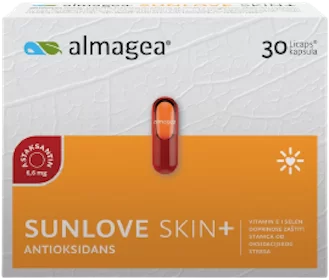
Skin care from the inside all year round and protection against oxidative stress.
23.98 €


Get to know us
Dietary supplements
Information
Let's connect
© 2024. Almagea d.o.o., Ulica Julija Knifera 4, 10 020 Zagreb
Fixed conversion rate: €1 = HRK 7.5345
buy quickly and safely