

Antioxidants, sexual health and reduction of oxidative stress

 7 MIN
7 MIN  ALMAGEA
  16.01.2024
7 MIN ALMAGEA 16.01.2024
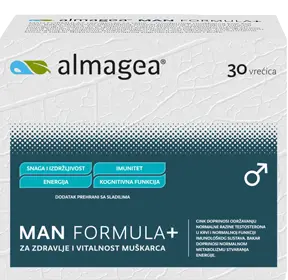
Folic acid belongs to group B vitamins, and is involved in nucleic acid synthesis and amino acid metabolism. There are numerous studies that have shown a link between folic acid and male infertility and erectile dysfunction in men.
Since it has the ability to eliminate free radicals, folic acid is used in the treatment of infertility. Taking folic acid is associated with an increase in the ratio of reduced to oxidized forms of glutathione, one of the body's most important antioxidants (Joshi et al., 2001).
Erectile dysfunction is associated with atherosclerosis, chronic inflammatory conditions, diabetes, hypercholesterolemia, hypertension, hypertriglyceridemia and obesity. Smoking, a sedentary lifestyle and improper diet also have an impact on the development of erectile dysfunction.
Review paper published in 2018.in the magazine Aging Male indicated that folic acid can be a factor in the development of erectile dysfunction. Namely, previous studies have shown how lack of folic acid contributes to the development of hyperhomocysteinemia. In addition, vitamin B deficiency6, folic acid and vitamin B12 negatively affects the biochemical reactions in which homocysteine participates, resulting in high levels of homocysteine in the body. An increased level of homocysteine impairs the function of the endothelium of blood vessels and erectile function.
U spomenutoj studiji bio je uključen 31 ispitanik s dijagnozom erektilne disfunkcije te kontrolna skupina koju je činio 31 zdravi ispitanik. Rezultati su pokazali kako muškarci s erektilnom disfunkcijom imaju značajno manje serumske razine folne kiseline, u odnosu na kontrolnu skupinu (5.11 ± 1.79 vs 7.9 ± 3.55 ng/ml, p<.001). Nadalje, muškarci s najnižim vrijednostima folne kiseline (5.11 ± 1.79) imali su i najteži oblik erektilne disfunkcije određen međunarodnim validiranim testom IIEF (Sansone i sur., 2018).

The effect of taking folic acid itself in the form of a dietary supplement on improving the condition of men with erectile dysfunction was also examined. In the research, the results of which were published in the magazine in 2019 Andrology 50 subjects with erectile dysfunction and 50 healthy subjects participated as a control group. During three months, the subjects took folic acid in the form of a dietary supplement in a dose of 500 µg. Before and after the therapy, the subjects underwent the IIEF erectile dysfunction test, an ultrasound of the penis, and their plasma homocysteine level was determined. The results showed a reduction in erectile dysfunction symptoms after taking folic acid. In addition, the value of the IIEF test increased from 6 to 14, and the level of homocysteine in the plasma decreased significantly in 39 subjects with moderate erectile dysfunction and 11 subjects with a more severe form of erectile dysfunction.
The authors concluded that this is one of the first studies that showed a positive effect of taking folic acid on homocysteine levels in men with erectile dysfunction, and they believe that folic acid should be prescribed as an adjunct to erectile dysfunction pharmacotherapy (Elshahid, 2019).
Lycopene is a plant pigment from the group of carotenoids with a strong antioxidant effect, which is responsible for the bright red color of tomatoes and other red fruits and vegetables.
Excessive formation of free radicals, reactive oxygen compounds, is considered one of the causes of infertility in men. Lycopene is an integral part of the mechanisms of the human redox defense system against free radicals.High concentrations of lycopene have been found in the testes and seminal fluid, and reduced levels have been observed in men suffering from infertility.
Antioxidants present in seminal fluid and spermatozoa are known to play a role in maintaining the antioxidant balance and protecting against the harmful effects of ROS. An excessive concentration of ROS can cause structural DNA damage in sperm cells, damage to their membrane and decrease in sperm motility, which consequently leads to abnormalities of seminal fluid parameters and the development of infertility. There is a lot of scientific evidence about the connection between the intake of antioxidants, that is, a diet enriched with lycopene, and the improvement of markers of oxidative stress in seminal fluid (Pakrashi, 2014).
The aim of the research published in 2002.in a scientific journal International Urology and Nephrology was to determine the effect of taking lycopene as a dietary supplement in men with idiopathic infertility. 30 subjects participated in the study, who took 2000 µg of lycopene twice a day for 3 months.
The analysis of seminal fluid after three months of taking lycopene showed an improvement in the concentration of seminal fluid in 66% of subjects, an improvement in sperm motility in 53% of subjects, and an improvement in sperm morphology in 46% of subjects. The authors of the study conclude that oral intake of lycopene in the form of a dietary supplement has a role in the treatment of idiopathic infertility in men (Gupta, 2002).
Vitamin E (tocopherol) belongs to the group of fat-soluble vitamins, and its basic property in the body is to act as an antioxidant. High levels of ROS in the body are considered harmful and lead to lipid peroxidation in the sperm plasma membrane and DNA fragmentation. Increased lipid peroxidation is associated with impaired sperm motility, as well as reduced ability of sperm to penetrate the egg cell.
The level of ROS is controlled by various antioxidant defense mechanisms, such as the action of alpha-tocopherol, which is present within the seminal fluid and plasma membrane of sperm. Vitamin E inhibits the peroxidation of polyunsaturated fatty acids in the sperm membrane and thus interrupts the chain reaction of free radical formation. Scientific research shows the role of vitamin E in the treatment of infertility in men (Wen, 2006).
Results of a double-blind study published in the journal Journal of Andrology noted an improvement in sperm motility and a decrease in the level of lipid peroxidation products after taking vitamin E as a dietary supplement for 6 months (Suleiman et al., 1996).
Furthermore, there is also evidence that points to a link between daily intake of antioxidants and better seminal fluid quality. The results of the study published in 2005 in the journal Human Reproduction showed that higher vitamin E intake is associated with better sperm motility in healthy men (Eskenazi et al., 2005).
Author: Prof. Dr.Sc. Darija Vranešić Bender, clinical nutritionist
Literature:
1. Joshi R, Adhikari S, Patro BS, Chattopadhyay S, Mukherjee T. Free radical scavenging behavior of folic acid: evidence for possible antioxidant activity. Free Radic Biol Med. 2001;30:1390–1399.
2. Sansone M, Sansone A, Romano M, Seraceno S, Di Luigi L, Romanelli F. Folate: a possible role in erectile dysfunction? Aging Male. 2018;21(2):116-120.
3. Elshahid ARM, Shahein IM, Mohammed YF, Ismail NF, Zakarria HBAE, GamalEl Din SF.Folic acid supplementation improves erectile function in patients with idiopathic vasculogenic erectile dysfunction by lowering peripheral and penile homocysteine plasma levels: a case-control study. Andrology. 2019; doi: 10.1111/andr.12672.
4. Pakrashi T., Oehninger S. Lycopene and male infertility: do we know enough? Asian J Androl. 2014; 16(3): 500.
5. Gupta NP, Kumar R. Lycopene therapy in idiopathic male infertility–a preliminary report. Int Urol Nephrol. 2002;34(3):369-72.
6. Wen, JC. The Role of Vitamin E in the Treatment of Male Infertility. Nutrition Bytes. 2006; 11(1).
7. Suleiman SA, Ali ME, Zaki ZMS, El-Malik EMA, Nasr MA. Lipid peroxidation and human sperm motility: protective role of vitamin E. J Androl. 1996;17:530-537.
8. Eskenazi B, Kidd SA, Marks AR, Sloter E, Block G, Wyrobek AJ. Antioxidant intake is associated with semen quality in healthy men. Hum Reprod. 2005;20(4):1006-1012.


Get to know us
Dietary supplements
Information
Let's connect
© 2024. Almagea d.o.o., Ulica Julija Knifera 4, 10 020 Zagreb
Fixed conversion rate: €1 = HRK 7.5345
buy quickly and safely